The Socio-Material Classroom: How Physical Design Shapes Instructional Reality
Walk into recently renovated progressive schools, and the physical design is unmistakable. Traditional rows are absent, replaced by writable glass, varied seating arrangements, and expansive floor plans. The foundational assumption driving these changes is that open, fluid environments automatically produce collaborative, self-directed learners.
However, an extensive review by Sowmya Sathish and Siu-Kit Lau (2026) examines 118 peer-reviewed studies to clarify how space actually impacts learning. Their findings demonstrate that physical space alone does not change student outcomes; it provides a framework that must be actively managed.
Below is an analysis of what their research reveals about modern classroom design, followed by an external evaluation of these architectural trends through the Science of Learning lens.
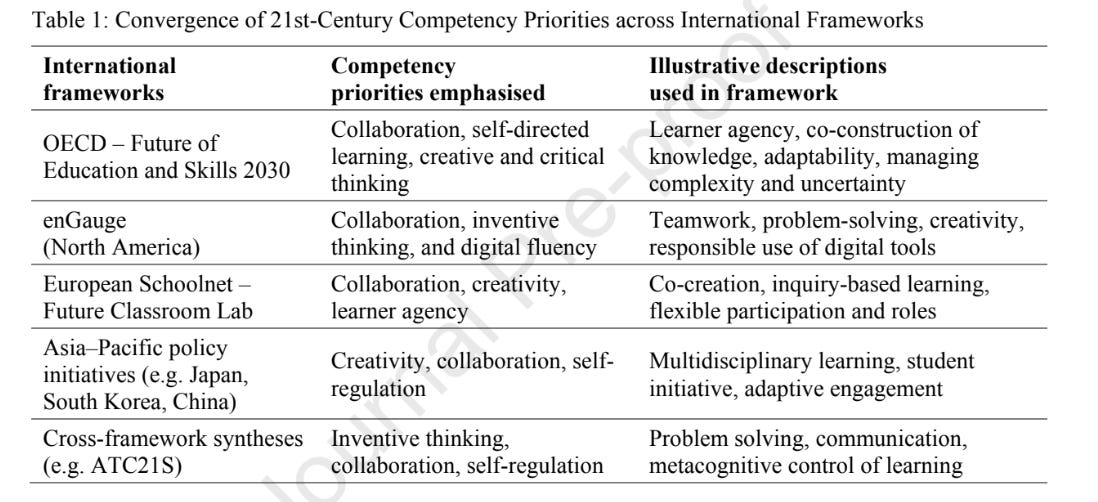
Sathish and Lau (2026) establish that international educational priorities heavily emphasize competencies like collaboration, problem-solving, and self-regulation.
To evaluate how physical space supports these targets, the researchers built a conceptual model intersecting three theoretical lenses: Socio-Material Theory, Constructivist Learning Theory, and Cognitive Flexibility Theory. (Note: The study focuses on Cognitive Flexibility Theory, how learners adaptively restructure knowledge for complex tasks, rather than Cognitive Load Theory).