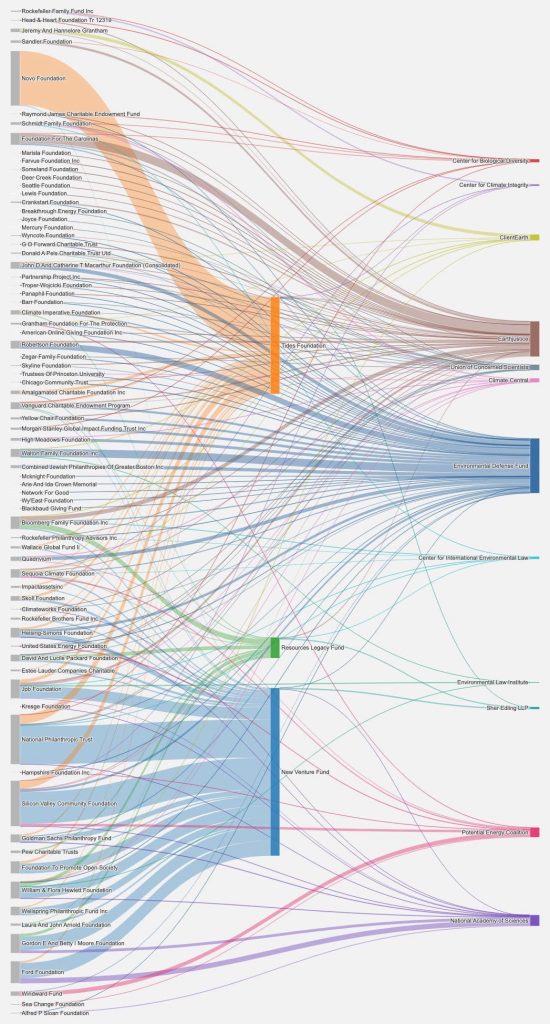
Indeed, it is quite a small group running a very loud legal campaign to skirt democratic policymaking process concerning the national energy system on which we all rely.
There is much to be concerned about the health of our democratic policymaking process, to be sure. But there is no improvement to be gained by using the courts “to require a rapid transition away from fossil fuels by judicial fiat,” as Trembath and Nordhaus put it.
A recent Maryland Supreme Court decisiondealing with municipal government pursuit of these ends put it another way: “No amount of creative pleading can masquerade the fact that the local governments are attempting to utilize state law to regulate global conduct that is purportedly causing global harm.”
On the other hand, there is concern about the ability of private philanthropic trusts or foundations to upend democratic life. This concern has deep roots.
In 1912, when John D. Rockefeller sought Congressional support to create a private foundation, various voices expressed concern that the wealthy elite would be able to influence politics not just through their current industrial might, but also ideologically from beyond the grave in perpetuity. At the time, the board chair of the American Civil Liberties Union testifiedthat, “it seems to me that this [Rockefeller] foundation, the very character, must be repugnant to the whole idea of a democratic society.”
More.