
| School Information System |
 | Sponsorships | Sponsorships |
|
|
Gary Gutting
People often dismiss philosophical disputes as mere quibbles about words. But shifts in terminology can turn the tide in public debates. Think of the advantage Republicans gained when discussion of the Affordable Health Care Act became discussion of "Obamacare." (Conversely, suppose we talked about "Bush-ed" instead of "No Child Left Behind"). Or consider how much thinking about feminism has changed with the demise of "men" as a term for people in general.
These thoughts about philosophy and language occur to me as a significant portion of our nation takes part in the mounting frenzy of "March Madness," the national college basketball championship. Throughout the tournament, announcers and commentators careful enough to heed the insistence of the National Collegiate Athletic Association, will refer to the players as "student-athletes."
But is this term accurate? Or should we perhaps leave it behind for a more honest and precise name?
The term "student-athletes" implies that all enrolled students who play college sports are engaged in secondary ("extra-curricular") activities that enhance their education. Their status, the term suggests, is essentially the same as members of the debate team or the band. As the N.C.A.A. puts it, "Student-athletes must, therefore, be students first."
There are, of course, many cases of athletes who are primarily students, particularly in "minor" (i.e., non-revenue producing) sports. But what about Division I football and men's basketball, the big-time programs with revenues in the tens of millions of dollars that are a major source of their schools' national reputation? Are the members of these teams typically students first?
The N.C.A.A.'s own 2011 survey showed that by a wide variety of measures the answer is no. For example, football and men's basketball players (who are my primary focus here) identify themselves more strongly as athletes than as students, gave more weight in choosing their college to athletics than to academics, and, at least in season, spend more time on athletics than on their studies (and a large majority say they spend as much or more time on sports during the off-season).
Newsletter signup | Send us your ideas
Like it or not, sports is a business. From big-time professional leagues like the National Football League to local high school action, sports have been a reliable revenue stream for decades.
At the college level, successful athletic programs have paid dividends for their schools by generating cash. Sporting events boost local economies in tourist dollars, money spent at bars, restaurants and hotels, and of course tax revenue for local government.
It's the fight over local business and tax revenue that has become the real center stage in a battle over tournament scheduling and the location of tournaments that is raging between the University of Wisconsin-Madison's Athletic Department and the Wisconsin Interscholastic Athletic Association, which officiates high school sports in the Badger State. At issue is where the boys and girls state basketball tournaments will play in 2013 and beyond.
Newsletter signup | Send us your ideas
Eliminating high school athletics during a school year is unusual, especially in a sports-loving state such as Texas.But that's exactly what's happening in this small ranching community where the school district is taking desperate measures to prevent a state-mandated closure due to poor academics.
The Premont Independent School District is even deploying its superintendent, a constable and high school principal to the homes of truant students in an effort to improve dismal attendance.
Newsletter signup | Send us your ideas
Do sports build character? For those of us who claim to be educators, it's important to know. Physical-education teachers, coaches, boosters, most trustees, and the balance of alumni seem sure that they do. And so they push sports, sports, and more sports. As for professors, they often see sports as a diversion from the real business of education--empty, time-wasting, and claiming far too much of students' attention. It often seems that neither the boosters nor the bashers want to go too far in examining their assumptions about sports.But in fact, sports are a complex issue, and it's clear that we as a culture don't really know how to think about them. Public confusion about performance-enhancing drugs, the dangers of concussions in football and of fighting in hockey, and the recent molestation scandal at Penn State suggest that it might be good to pull back and consider the question of athletics and education--of sports and character-building--a bit more closely than we generally do.
Newsletter signup | Send us your ideas
How does a project increase 42% in less than a year? How does it mushroom 83% in less than 2 years?More, here.
WHY WHY WHY does this district continue to pound for more than more, better than best? And how do these numbers keep growing? What originally was discussed as a maximum taxpayer commitment of $475,000 has ballooned into the idea of going to referendum with the "new building (elementary school) referendum? Note once again that no decision has been made to even BUILD a new building...but athletic director McClowry and district administration put forth a Situation Report that sure seems certain that that is what's going to happen?Let's stroll back through time, shall we? Take a look see at how the landscape of the Ashley Project has changed.
Newsletter signup | Send us your ideas
Former Glades Central football coach Jessie Hester resigned Thursday as coach at Suncoast after just 10 months at the school.Hester, 48, said the job at one of Palm Beach County's top academic public schools "wasn't the right fit" for him. The academic pressures the students faced made it difficult for the football team to practice and prepare for games, Hester said, adding that his team would go weeks without a full practice because his players had other school obligations.
The Chargers finished 4-6, missing the playoffs and tying for third in a five-team district.
"There are great, great people at the school, and great kids," Hester said, "but it was just not a good fit for me. It was too difficult to do the things I wanted to do in that situation."
It was no secret that Suncoast, with its nationally ranked academic programs and rigorous academic requirements, would be a more challenging job than Hester's previous job at his alma mater.
Newsletter signup | Send us your ideas
Jacob Rainey is inspiring people all across the sports world - and no more so than giants from the NFL.The Virginia prep quarterback who had to have part of his right leg amputated has moved the likes of Alabama coach Nick Saban, Green Bay Packers linebacker Clay Matthews and Denver quarterback Tim Tebow.
A highlight film of Rainey on YouTube shows why college coaches had taken notice.
It shows the once-promising quarterback at Woodberry Forest School throwing a 40-yard dart for a touchdown, running into the line on a quarterback sneak, then emerging from the pile and sprinting 40 yards for a TD. There is also of clip of him running a draw for another 35-yard score.
All that was taken away, without warning when he was tackled during a scrimmage on September 3. He suffered a severe knee injury and a severed artery and part of his right leg had to be amputated.
Newsletter signup | Send us your ideas
The gap in grade point averages between male and female students widens when their college football team is winning.As the college football season approaches its climax, a just-released set of statistics should give fans of Bowl-bound teams pause.
According to three University of Oregon economists, when a university's football team has a winning season, the grade point average of male students goes down.
At least, that was the case at their own school over the course of nine recent seasons. Given that the University of Oregon is "largely representative of other four-year public institutions," they have no reason to believe the equation won't apply elsewhere.
Newsletter signup | Send us your ideas
Yesterday, the California Charter Schools Association caused a stir. The pro-charter group came out with a list of 10 independently-run schools it deemed underperforming -- and encouraged their respective school districts to close them when their 5-year contracts expire!That list included West County Community High in Richmond, as my colleague Hannah Dreier reported in today's paper. Leadership High in San Francisco was also on it.
The complete list included 31 schools, but the association only published the names of those that are nearing the end of their 5-year terms and seeking a charter renewal.
Here's the reasoning behind the mov, from the news release:
Newsletter signup | Send us your ideas
I recently received a history paper submitted by a high school Junior who was kind enough
to enumerate the hours he has spent on athletics in a recent year:
Football: 13 hours a week, 13 weeks per year. (169 hours)
Basketball: 12 hours a week, 15 weeks per year. (180 hours)
Lacrosse: 12 hours a week, 15 weeks per year. (180 hours)
Summer Lacrosse: 10 hours per week, 15 weeks per year. (150 hours)
This yields a total, by my calculations, of
169 + 180 + 180 hours = 529 hours + 150 in the summer, for a new total of 679 hours.
We are told that there is no time for high school students to write serious history research papers, which they need to do to prepare themselves for college academic requirements. It seems likely that this young man will be better prepared in athletics
than in academics.
If it were considered important for all students to read history books and to write a serious history research paper, 679 hours (84 eight-hour days) might just be enough for them to manage that.
This particular young man made the time on his own to write a 28-page history research paper with a bibliography and 107 endnotes and submit it to The Concord Review, but this was not his high school requirement.
===============
"Teach by Example"
Will Fitzhugh [founder]
The Concord Review [1987]
Ralph Waldo Emerson Prizes [1995]
National Writing Board [1998]
TCR Institute [2002]
730 Boston Post Road, Suite 24
Sudbury, Massachusetts 01776-3371 USA
978-443-0022; 800-331-5007
www.tcr.org; fitzhugh@tcr.org
Varsity Academics®
www.tcr.org/blog
Newsletter signup | Send us your ideas
Spring means murre eggs and bowhead whales. Summer is seals and salmon and berries. Fall and winter are a time to track caribou.And then there is that other season here at the edge of the earth, the one that never seems to end.
It is called basketball season, and it, too, has become crucial to existence.
"When I leave school I don't have to think about it, I know I'm coming here," said Caroline Long, 18, a senior at Tikigaq School. "I know for a fact that this is where I'm going to be."
The "this" Ms. Long was referring to is this tiny village's magical redoubt from the dark and forbidding Arctic and one of the secrets of its outsize stature in Alaska sports lore: open gym.
Newsletter signup | Send us your ideas
Choehorned into a small living room in a South Los Angeles apartment, a dozen parents discuss why their kids' school ranks as one of the worst in the nation's second-largest school district.The answers come quickly: Teachers are jaded; gifted pupils aren't challenged; disabled students are isolated; the building is dirty and office staff treat parents disrespectfully.
"We know what the problem is -- we're about fixing it," said Cassandra Perry, the Woodcrest Elementary School parent hosting the meeting. "We're not against the administrators or the teachers union. We're honestly about the kids."
School parent groups are no longer just about holding the next bake-sale fundraiser. They're about education reform.
Newsletter signup | Send us your ideas
Education writers rarely examine high school sports, but something is happening there that might help pull our schools out of the doldrums.In the last school year, a new national survey found, 7,667,955 boys and girls took part in high school sports. This is 55.5 percent of all students, according to the report from the National Federation of State High School Associations, and the 22nd straight year that participation had increased.
Despite two major recessions and numerous threats to cut athletic budgets to save academics, high schools have found ways not only to keep sports alive but increase the number of students playing. We have data indicating sports and other extracurricular activities do better than academic classes in teaching leadership, teamwork, time management and other skills crucial for success in the workplace.
Coaches may be the only faculty members still allowed by our culture and educational practice to get tough with students not making the proper effort. They have the advantage of teaching what are essentially elective non-credit courses. They can insist on standards of behavior that classroom teachers often cannot enforce because the stakes of dismissing or letting students drop their courses are too high.
Newsletter signup | Send us your ideas
John V. Lombardi , Elizabeth D. Capaldi and Craig W. Abbey:
Those of us who inhabit the core of the university's academic environment share the enthusiasm for measuring and evaluating the quality of our institutions, although we have less enthusiasm for the endless ranked lists that appear in popular publications.While some dote on the U.S. News rankings, which like their BCS counterpart rely on hugely unreliable opinion surveys, we, however, prefer our own system for evaluating the Top American Research Universities that recognizes the importance of successful performance among highly competitive institutions without requiring a simple top to bottom ranking that often distorts more than it informs.
For over ten years, The Center for Measuring University Performance, now located at Arizona State University, has produced an annual report on the Top American Research Universities that uses objective data on nine measures to put universities into categories according to their performance.
Newsletter signup | Send us your ideas
Somebody will win Saturday's football game between Ohio State and Miami, which has been jokingly dubbed "the IneligiBowl." But no matter the outcome, neither team can fairly consider itself a winner.Both of these football powerhouses are under NCAA investigation for alleged rules violations in which athletes were given cash, gifts and services ranging from tattoos to wild parties on a private yacht. The NCAA, which is rightly determined to make sure its championships can't be bought, forbids athletes from taking anything from supporters beyond the benefits in their scholarships.
As the muck thickens, the narrative that has taken hold is that the lucrative end of college sports--particularly football--is a fetid swamp that needs to be drained and disinfected. But amid all the righteous indignation, there's a small but incongruous fact lurking just outside the picture: In most cases where college athletes take money, the sums are pretty small.
Newsletter signup | Send us your ideas
For many middle school students, the words "Phys Ed" are enough to provoke fear--fear of getting dressed in the locker room, of wearing a nerdy uniform, of looking clumsy, of being picked last.Tammy Brant, a gym teacher at Selma Middle School, in Selma, Ind., is rethinking the way schools have taught girls and boys about fitness. Instead of group calisthenics and contests that favor the most athletic kids, Ms. Brant, like many other teachers nationwide, devotes class time to fitness instruction and to games structured so that more kids can play and enjoy.
Instead of pushing everyone to hit specific performance targets, she urges them to progress toward individualized "fitness zones." She teaches the stages of a workout--warm-up, training, cool-down--and straps a heart monitor on each child. The goal is to instill healthy habits for life.
Newsletter signup | Send us your ideas
With the institution she leads, the University of Miami, in the midst of a football scandal that threatens to be among the worst in National Collegiate Athletic Association history, Donna E. Shalala might be forgiven for trying to change the conversation about Miami's sports program away from acknowledged rule breaking by current and former players, possible wrongdoing by university employees, and the potential imposition of the NCAA's "death penalty."In the latest in a series of public statements she has made since the controversy broke several weeks ago, Shalala shifted the focus this week to the academic performance of Miami's athletes. In doing so, however, she engaged in some hyperbole about the institution's standing and the company it keeps.
Newsletter signup | Send us your ideas
Randy White of the Dallas Cowboys, star defensive tackle of the 1970s, member of both the College Football Hall of Fame and Pro Football Hall of Fame: What a joy it was to watch him play! White was a master of leverage, burst and anticipation. Today, he might not even make an NFL roster. If White got on the field, he'd be crushed.White played defensive tackle at 257 pounds, across from centers weighing 240 or 250 pounds and guards who were considered huge if 265. Last year's Super Bowl featured defensive tackles B.J. Raji (337 pounds) and Casey Hampton (330 pounds) versus guards Chris Kemoeatu (344 pounds) and Josh Sitton (318 pounds). Either guard would have steamrolled Randy White as if he wasn't there.
As for today's biceps: Your Honor, I call to the stand America's leading expert on these matters, Mel Kiper Jr. Everyone assumes today's football players are bigger, faster and stronger than those who came before. But what does the data show? No one is better suited to answer that question than Kiper.
Far, far in the past -- about 1980 -- the United States was not obsessed with the NFL draft. Of course that's hard to imagine today. Once, bread did not come sliced. But I digress.
Newsletter signup | Send us your ideas
College football, to put it as charitably as possible, had a less-than-ideal offseason.From the Southeast to the Pacific Northwest, a series of scandals, controversies, academic outrages and incidents of boorish behavior has taken a toll on the good names of several schools.
This weekend's spotlight game, for instance, pits No. 3-ranked Oregon, a school that's under NCAA investigation for possible recruiting violations, against No. 4 LSU, whose top quarterback, Jordan Jefferson, is suspended for his part in a brawl outside a campus watering hole called Shady's.
Newsletter signup | Send us your ideas
From the standpoint of most spectators, football is all about the game. From the standpoint of most players, football is all about practice. What players go through at practice, particularly two-a-days, can be more grueling than what they go through during games. When coaches tell players, "Compared to practice, the game will be fun," they aren't kidding.Though spectators and viewers think of games as the dangerous part of football, because it's during games that injuries are widely seen -- coaches whom I have interviewed think players are more likely to be injured at a practice than during a game. Partly this is simply because players spend so much more time practicing than performing, meaning more hours of risk.
Newsletter signup | Send us your ideas
At first glance, the ongoing lawsuit between the Wisconsin Interscholastic Athletic Association and Gannett Newspapers might seem like the Iran-Iraq War, or a Bears-Vikings game -- fans of neither side might wonder if both could lose.The WIAA, the sanctioning body for Wisconsin high school athletics, sued Gannett after The Post~Crescent live-streamed several football playoff games in 2008. If a media organization wants to broadcast or stream postseason games, it must get the WIAA's permission, pay a fee, and adhere to various other rules:
Internet blogs, forums, tweets and other text depictions or references are permitted and are not subject to rights fees unless they qualify as play-by-play (see definition below) or are not in compliance with the media policies of the WIAA. Play-by-play accounts of WIAA Tournament Series events via text are subject to text transmission rights fees.
Newsletter signup | Send us your ideas
The U.S. Department of Education released a new analysis of state standards this week that maps the standards against federal ones to assess rigor. We don't look strong on the mapping, especially in eighth grade reading where we trail the nation.The analysis using National Center for Educational Statistics data superimposes a state's standard for proficient performance in reading and mathematics onto a common scale defined by scores on NAEP, a federal test administered to student samples in every state to produce a big picture view of American education. (This report offers a lot of data and great graphics.)
The most alarming mapping revealed that Georgia's standard for proficiency in 8th grade reading is so low that it falls into the below basic category on NAEP scoring. (We don't look in 8th grade math, either, but the feds warn that our change from QBE standards to Georgia Performance Standards undermines comparisons.)
Newsletter signup | Send us your ideas
In the spring of that hard year, 1968, the Columbia University crew coach, Bill Stowe, explained to me that there were only two kinds of men on campus, perhaps in the world--Jocks and Pukes. He explained that Jocks, such as his rowers, were brave, manly, ambitious, focused, patriotic and goal-driven, while Pukes were woolly, distractible, girlish and handicapped by their lack of certainty that nothing mattered as much as winning. Pukes could be found among "the cruddy weirdo slobs" such as hippies, pot smokers, protesters and, yes, former English majors like me.I dutifully wrote all this down, although doing so seemed kind of Puke-ish. But Stowe was such an affable ur-Jock, 28 years old, funny and articulate, that I found his condescension merely good copy. He'd won an Olympic gold medal, but how could I take him seriously, this former Navy officer who had spent his Vietnam deployment rowing the Saigon River and running an officers' club? Not surprisingly, he didn't last long at Columbia after helping lead police officers through the underground tunnels to roust the Pukes who had occupied buildings during the antiwar and antiracism demonstrations.
Newsletter signup | Send us your ideas
The Ivy League will announce on Wednesday that, in an effort to minimize head injuries among its football players, it will sharply reduce the number of allowable full-contact practices teams can hold.The changes, to be implemented this season, go well beyond the rules set by the N.C.A.A. and are believed to be more stringent than those of any other conference. The league will also review the rules governing men's and women's hockey, lacrosse and soccer to determine if there are ways to reduce hits to the head and concussions in those sports.
The new rules will be introduced as a growing amount of research suggests that limiting full-contact practices may be among the most practical ways of reducing brain trauma among football players. According to a study of three Division I college teams published last year in the Journal of Athletic Training, college players sustain more total hits to the head in practices than in games.
Newsletter signup | Send us your ideas
Wisconsin union protests may not be national front page news, but as its model is picked up nationwide, educators worry as childrens programs are cut while football coaches continue to earn big bucks.In Wisconsin, educators worry about children's programs like Headstart being trimmed, and feared cut, as well the breakfast programs for hungry children being eliminated, as football coaches get first rank in the hiring and firing parades.
The FASEB Journal examines the problems of education, as the editor wonders, as educators do, what has happened to education and the value placed on it in the decisions made by politicians. He uses some of what happened in Wisconsin as a model to look at this issue. The Journal points out the United States will continue to pedal backwards in relationship to the accomplishments of other countries, as children fall further and further behind youngsters of comparable ages in other countries. Right now only Luxembourg , among the developed countries, is the only one that pays less per child on education than the United States.
Newsletter signup | Send us your ideas
Physical education classes may be scarce in some schools, but an activity program combined with school lessons could boost academic performance, a study finds.Research presented recently at the Pediatric Academic Societies meeting in Denver looked at the effects of a 40-minute-a-day, five-day-a-week physical activity program on test scores of first- through sixth-graders at a public school. This program was a little different from most, since it incorporated academic lessons along with exercise.
For example, younger children hopped through ladders while naming colors found on each rung. Older children climbed on a rock wall outfitted with numbers that challenged their math skills. The students normally spent 40 minutes a week in PE class.
Newsletter signup | Send us your ideas
College basketball doesn't get any more glamorous than it does at North Carolina, a school that boasts one of the sport's most prestigious programs. On this campus, the basketball players are lords of the manor.But this spring, Carolina's men's team has started a new tradition, one that stands in sharp contrast to the booming prominence of the sport.
Since they bowed out of the NCAA's Elite Eight last month, members of North Carolina's Tar Heels have been showing up a campus dormitory courts to play five-on-five pickup basketball games with students. We caught up with some of the players at a recent session.
Since they bowed out in the NCAA Tournament's Elite Eight last month, the players have been killing time before finals exams by showing up at outdoor courts at campus dormitories to play five-on-five pick-up games with students--just for fun. To make sure they draw a crowd, the players announce their plans beforehand on Twitter.
On a cloudless afternoon last week, five Carolina players showed up to the outdoor court at Granville Towers. As spectators in sunglasses and sundresses dangled their legs over the brick walls, a pack of would-be student challengers in sneakers and t-shirts made a beeline to the free-throw line, where the first five to sink shots would earn the right to play.
Newsletter signup | Send us your ideas
U.S. Secretary of Education Arne Duncan ushered in the NCAA Men's Basketball tournament earlier this month with an op-ed in The Washington Post arguing that schools should only qualify for post-season play if they are on track to graduate at least 40 percent of their players.The argument by Duncan, who is a basketball player and fan himself, has been made by many critics, including the Knight Commission for Intercollegiate Athletics, which proposed restricting participation to only those programs that graduated more than half of their players. And rightfully so: men's college basketball does a poor job of graduating its players, with 10 of the original 68 teams in the tournament not meeting the "50 percent" benchmark this year. This leaves players who don't go professional -- the vast majority of them -- without the knowledge and skills they need to succeed in the real world. Many sportswriters and fans, on the other hand, think that Duncan's viewpoint is out of touch --and that critics of NCAA basketball and football need to come to grips with the fact that, for many athletes who play for hugely popular athletics programs, the sport is simply more important than the degree.
Newsletter signup | Send us your ideas
When Heriberto Avila lost his leg as a result of an accident during a high school wrestling match in January, he and his family could have started calling lawyers. They could have turned bitter or angry.But on the day Heriberto, a Belvidere North High School senior known as Eddie, woke up in a hospital bed and tearfully struggled to deal with the shock that his left leg had been amputated, he reminded his family and his pastor, who were in the room with him, that he was not the only one who needed solace.
He was worried about his wrestling opponent, Sean McIntrye, a senior at Genoa-Kingston High School, whose legal take-down had caused the broken bones and the rupture in a blood vessel that led to the amputation.
Newsletter signup | Send us your ideas
Sony Michel is still a high school freshman, yet he has shown flashes of Hall of Fame potential. A tailback for American Heritage in Plantation, Fla., Michel has rushed for 39 touchdowns and nearly 3,500 yards in two varsity seasons."He's on par to be Emmitt Smith, on par to be Deion Sanders, on par to be Jevon Kearse," said Larry Blustein, a recruiting analyst for The Miami Herald who has covered the beat for 40 years. "He'll be one of the legendary players in this state."
Michel's recruitment will also be a test case for a rapidly evolving college football landscape. The proliferation of seven-on-seven nonscholastic football has transformed the high school game, once defined by local rivalries, state championships and the occasional all-star game, into a national enterprise.
Newsletter signup | Send us your ideas
The University of Wisconsin Athletic Department had its operating budget request of $88.368 million for 2011-12 approved without rancor or debate Friday.Members of the UW Athletic Board voted unanimously to allow the department to spend $5.29 million more than its current operating budget of $83.219 million, an increase designed primarily to address two major capital projects.
The matter-of-fact process and calm pulse of the meeting was in contrast to the mood at the Capitol, where protesters, controversy and edgy rhetoric defined a state budget crisis.
Asked to weigh the two developments, UW athletic director Barry Alvarez acknowledged that sooner or later they will become one.
Newsletter signup | Send us your ideas
I'm certain many of you read (or heard) about Milwaukee Hamilton star basketball player Elgin Cook's sudden departure from the team. I'm also certain you heard his mother has taken him out of state fearing for her son's life due to his (alleged) role in what led to the Milwaukee King basketball player being shot. If not, click here to read the story on jsonline.My comments aren't going to address the drama Cook and the other boy got themselves caught up in. I'm focused on a tragedy that continues to occur with the Black Student-Athlete over and over in Milwaukee Public Schools. I'm sick and tired of reading and hearing about OUR BEST (and average) student-athletes being academically ineligible before, during and after the sports season. What the hell is going on when kids who are being offered scholarships to play in college cannot maintain a simple 2.0 gpa?
Let's look at Cook for a moment. In the jsonline article, it mentions that he missed the first 3 games of this season due to being academically ineligible. Yet, in October he signed a letter of intent to accept a scholarship to play basketball at Iowa State. How is this possible? It's one thing for OUR kids to be lacking the grades and preparation for higher learning, but it is another thing when large colleges and universities know they aren't ready but bring them in anyway.
Newsletter signup | Send us your ideas
Darren Everson & Jared Diamond:
As college football's 2011 recruiting classes took shape last week, much of the talk was dominated by the usual question: Which team pulled in the richest talent haul? Some say it was Alabama, others Florida State.What was not acknowledged, or even noted, was the impressive and unusual incoming class assembled by Stanford.
The school, which is coming off its best football season in 70 years, didn't land the most physically talented class of high school football players. The consensus says their crop ranks somewhere around No. 20 in the nation among all the major college programs. What stands out about Stanford's class is something entirely different: what superior students they are.
Wayne Lyons, a four-star defensive back from Fort Lauderdale, Fla., who has a 4.96 weighted grade-point average and likes to build robots in his spare time, is widely considered the best student among the nation's elite recruits. When he visited Stanford, he said he was whisked to a seminar on building jet engines and to a facility where robots are built.
Newsletter signup | Send us your ideas
There is no limit to what you learn about schools if you listen to teachers. Did you know, for instance, that Fairfax County, the Washington region's largest school district, is using 10 days a year of valuable instruction time on do-what-you-like recesses for high school students?I didn't, either. West Springfield High School physics teacher Ed Linz says this program, designed to help struggling students, is a waste. At his school, students get 90 free minutes a week, which they can use to find dates for Saturday night or check basketball scores, if they want. But his principal, Paul Wardinski, says most students do homework, work on group projects and enrich their studies. It helps teachers to be creative, he says, even if some students look for imaginative ways to goof off.
Linz disclosed the recesses to the county School Board last month. Like President Obama, he said that this is our Sputnik moment and that we can't win the future throwing away precious class time.
Newsletter signup | Send us your ideas
From his office window, Steve Williams surveyed the chaos of construction. His view consisted of rocks and dirt beneath bulldozers and cranes, but where others might see excess, he saw something brazen, bold and gloriously Texan.The $60 million football stadium at Allen High School, where Williams is the district athletic director, was starting to take shape.
This is no ordinary stadium, in no ordinary state, where football ranks near faith and family. Super Bowl XLV will take place a short drive southwest next Sunday at Cowboys Stadium in Arlington, but while the "big game" will repeatedly highlight football's oversize importance in Texas, the folks in Allen need no reminders. Here, every game is big.
Williams -- Bubba to his friends -- arrived long before the boom, when Allen was more speck than sprawl, and now he cannot fathom all the fuss over this stadium, the calls from England, the Pacific Northwest, New York.
Newsletter signup | Send us your ideas
A Wisconsin case that could have nationwide implications for how reporters cover and how parents watch high school sports is making its way through the courts, with crucial constitutional arguments taking place Friday in federal court in Chicago.The case pits community newspapers against the association that oversees high school sports in Wisconsin. Fans in many states rely on community newspapers for news about high school teams, and the newspapers say they need easy, unencumbered access to sporting events to provide that coverage. But the association says it can't survive if it can't raise money by signing exclusive contracts with a single video-production company for streaming its tournaments.
The newspapers argued Friday before the 7th Circuit Court of Appeals that the First Amendment's guarantee of freedom of press should enable them to put such publicly funded events online as they see fit, free of charge.
The case began in 2008, when the Wisconsin Interscholastic Athletic Association sued The Post-Crescent of Appleton after it streamed live coverage of high school football playoff games. After a U.S. District judge sided with the association last year, saying its exclusive deal with a video production company didn't impinge on freedom of the press, the newspaper's owner, Gannett Co., and the Wisconsin Newspaper Association appealed.
Newsletter signup | Send us your ideas
Myles Henry had no idea what his future held. The former Nicolet standout was struggling with his ACT scores last summer and his collegiate choices were limited.Russell Finco was equally confused. The former Arrowhead standout went to St. Cloud State in June to begin a football career. But Finco suffered the latest in a string of concussions, was told to quit football and was in limbo.
Neither player ever dreamed he'd wind up being part of the postgraduate basketball program at St. John's Northwestern. Today, both are thrilled to be Lancers.
St. John's began a basketball program this season for high school graduates who have the potential to play collegiately but need an extra year of preparation. The student-athletes retain all their collegiate eligibility and get an extra year to improve their games and their grades.
Newsletter signup | Send us your ideas
Steve Wieberg, Steve Berkowitz and Jodi Upton
Pat Hill came cheap when he broke into college football coaching a little more than 3½ decades ago.
He worked his first job at a California community college without pay, making ends meet by moonlighting Tuesdays and Thursdays as a pinsetter at a bowling alley and Fridays and Saturdays, when football allowed, as a bouncer. He lived for a while in his Chevy van."I've never been a monetary guy," he says.
The contract that will take him into his 15th season as head coach at Fresno State offers further testament.
Hill will take a more than $300,000 cut in guaranteed pay in 2011, an extraordinary concession to a school budget stretched thin by the troubled economy. His guaranteed take of $650,000 remains considerable, but he'll have to cash in heavily on incentives to match, or even approach, his nearly seven-figure earnings in 2010.
Newsletter signup | Send us your ideas
A Kansas coroner confirmed Thursday that the brain injury that killed Spring Hill High School football player Nathan Stiles on Oct. 29 came from a part of the 17-year-old's brain that had bled earlier this year.Michael Handler, the Johnson County corner and a neuropathologist, informed the Stiles family Thursday that the exact cause of death was a subdural hematoma, which Nathan Stiles likely suffered Oct. 1 during Spring Hill's game against Ottawa.
"[Handler] said it was a perfect example of a subdural hematoma," Connie Stiles said. "You could see where his brain had been healing. You could see where it was starting to get better. It seems like everything can be traced back to that first hit. That's what he thinks."
The morning after the Ottawa game is when Stiles, Spring Hill's homecoming king and team captain, first began complaining of headaches. Five days later Connie Stiles took her son to Olathe Medical Center, where he underwent a CT scan and was diagnosed with a concussion.
Newsletter signup | Send us your ideas
Maybe the IRS actually knows what it is doing. With any luck, they can look at the overwhelming number of athletic departments that are not earning a profit and realize that removing the NCAA's tax-exempt status would only have a nominal return. Perhaps the IRS realizes that the nominal return that such a tax would generate would have such a sweeping effect on collegiate athletics that it may actually hurt schools more than it would help. Whether they realize this or do not want to overturn a long-lived precedent, the IRS has not fumbled its duty concerning the tax-exempt status of the NCAA. At this point, there is no reason to disrupt the current tax-exempt status of the NCAA, and there is no evidence that points to a change being necessary in the near future.
Newsletter signup | Send us your ideas
Today, The Boston Globe published the latest in a long series of special "All-Scholastics" 14-page (12x22-inch) supplements on good local high school athletes from a variety of sports. These celebrations are produced three times a year (42 pages) with lots of pictures and little bios and lists of all-stars from the Boston area.
Again this Fall, there was no room for any mention by The Boston Globe of any noteworthy academic achievement by local students at the high school level. Christiane Henrich of Marblehead HS, in Marblehead, Massachusetts, wrote a 7,360-word Emerson-prize-winning history research paper on the quality (good for the day) of U.S. Civil War medicine. It was published in the only journal in the world for the academic papers of secondary students...No room in The Boston Globe for that to be mentioned. She is now at Stanford and doesn't mind, but I mind about all the Boston-area students who are fed a constant diet of praise for athletic achievement by their peers and at the same time are starved of any and all news of the academic achievements of their peers.
In fact, over the years I have published a good number of exemplary history papers by high school students from the Boston area and they did not and do not get mentioned in The Boston Globe, nor do the academic achievements of our high school students in foreign languages (e.g. National Latin Exam, etc.), AP subject tests in Calculus, Chemistry, European history or in any other field, receive any notice from the Globe.
International competitions reveal that we are below average in Reading, Math and Science. Perhaps we should just explain that we don't care about that stuff as much as we do about swimming, soccer, cross-country, football, golf, field hockey, and volleyball, because achievement by our high school students in those efforts are what we really like to pay attention to, (not that academic stuff), at least when it comes to The Boston Globe.
The Boston Globe (and its subscribers) are, in this way, sending a constant stream of clear messages (42 pages at a time in supplements, not to mention regular daily columns on HS sports) that in Boston (The Athens of America) what we care about is kids doing well in sports. If they do well in academics we don't think that is worth mentioning. Sick, sad, and self-destructive, but there we are.
---------------------------
"Teach by Example"
Will Fitzhugh [founder]
The Concord Review [1987]
Ralph Waldo Emerson Prizes [1995]
National Writing Board [1998]
TCR Institute [2002]
730 Boston Post Road, Suite 24
Sudbury, Massachusetts 01776-3371 USA
978-443-0022; 800-331-5007
www.tcr.org; fitzhugh@tcr.org
Varsity Academics®
www.tcr.org/blog
Newsletter signup | Send us your ideas
Education Secretary Michael Gove's decision to end ring-fenced funding for school sports "quite frankly flew in the face" of the UK's commitment to a lasting sports legacy after the 2012 Olympic Games, Labour has claimed.Shadow education secretary Andy Burnham said there was widespread disbelief over Mr Gove's £162 million cut in sports funding for English state schools.
And he seized on an Observer report that suggested Deputy Prime Minister Nick Clegg and Health Secretary Andrew Lansley had expressed concerns in Cabinet over the decision.
Mr Gove has insisted that overall spending in schools has increased and it is up to headteachers to decide their own priorities.
But Mr Burnham told Sky News' Sunday Live: "I remember the 1980s when school sports dried up and when I worked in government I was on a mission to rebuild it and that's what we've done in the last 10 years.
Newsletter signup | Send us your ideas
Arrowhead High School will pay for girls lacrosse and alpine skiing programs following an investigation by the U.S. Education Department's Office for Civil Rights, according to documents provided to the Journal Sentinel.It was the second such major investigation into how the Waukesha County high school treats the athletic interests of boys and girls, protected under Title IX of the Education Amendments of 1972, in the last four years.
According to an Oct. 29 letter from Jeffrey Turnbull with the OCR's Chicago office, the federal government concluded "that the District is not currently fully and effectively accommodating the interests and abilities of its girls."
Newsletter signup | Send us your ideas
The fans in the home team rooting section were stunned when visiting Don Bosco Prep called a timeout with about two minutes remaining in the first half in an attempt to regain possession of the football.Their version of "Friday Night Lights" was devolving into Friday Night Spite, a rerun of the 71-0 shellacking they had witnessed the year before. And when Bosco quarterback Gary Nova hit a receiver over the middle, in full stride, for an 80-yard touchdown with no time on the clock, the Clifton High School fans responded in full-throated frustration.
The booing started and someone yelled, "bush league," and another fan sarcastically encouraged Bosco to go for a 2-point conversion.
Instead, Bosco kicked the extra point and settled for a 48-0 halftime lead.
Newsletter signup | Send us your ideas
Political scientist Barry Rubin has an interesting column criticizing the modern tendency to teach kids that playing to win is bad:My son is playing on a local soccer team which has lost every one of its games, often by humiliating scores. The coach is a nice guy, but seems an archetype of contemporary thinking: he tells the kids not to care about whether they win, puts players at any positions they want, and doesn't listen to their suggestions.He never criticizes a player or suggests how a player could do better. My son, bless him, once remarked to me: "How are you going to play better if nobody tells you what you're doing wrong?" The coach just tells them how well they are playing. Even after an 8-0 defeat, he told them they'd played a great game.
And of course, the league gives trophies to everyone, whether their team finishes in first or last place.....
[A]m I right in thinking that sports should prepare children for life, competition, the desire to win, and an understanding that not every individual has the same level of skills? A central element in that world is rewarding those who do better, which also offers an incentive for them and others to strive....
Newsletter signup | Send us your ideas
Then came football.Stevenson spent $500,000 this year to create an intercollegiate team from scratch, largely as a means to fill the campus with tuition-paying men. The program has drawn 130 players, raising the male share of the freshman class from 34 to 39 percent in a single year at the 3,075-student university.
The suburban Baltimore school is one of at least a dozen small, private colleges in the United States that have added or rebuilt football programs in the past three years, usually with the dual purpose of feeding the bottom line and narrowing the gender gap.
For many small, regional colleges facing a bleak admissions landscape, the gridiron is a beacon of hope. The college-age population is leveling off. The economy is sluggish. Private colleges must offer ever-larger tuition discounts to fill the freshman class.
Newsletter signup | Send us your ideas
Credit Cal with taking up a third-rail topic: the runaway costs of college sports. After trimming academics, the campus heeded an outcry and ordered up a study on its athletic department.The fix-it suggestions include the usual: more fundraising, better management and a call for thrift in the face of a $10 million-and-rising yearly deficit. There's another idea in the report written by alumni and faculty leaders: Consider cutting five to seven teams from Berkeley's roster of 27 sports squads.
Campus higher-ups may make a decision within the next two weeks on cutting teams. If it happens, it will be an emotional, complicated but necessary calculation. Sports knit the campus together. Headlines and broadcasts give Cal visibility. Check-writing alums start out donating to athletics, but later contribute bigger sums to academic causes and building projects. These benefits can't be ignored.
Newsletter signup | Send us your ideas
Count college sports among the sagging economy's latest victims.A newly released NCAA report shows that just 14 of the 120 Football Bowl Subdivision schools made money from campus athletics in the 2009 fiscal year, down from 25 the year before.
Researchers blame the sagging economy and suggested that next year's numbers could be even worse.
The research was done by accounting professor Dan Fulks of Transylvania University, a Division III school in Lexington, Ky. It shows the median amount paid by the 120 FBS schools to support campus athletics grew in one year from about $8 million to more than $10 million.
Newsletter signup | Send us your ideas
University of Wisconsin athletic officials are asking for a $76.8 million athletic performance center in the next two-year state budget, just five years after a $109.5-million expansion of Camp Randall Stadium.The UW System Board of Regents will review the request, which does not involve any tax dollars, Thursday.
The proposal includes a new multistory building used primarily for football with new locker rooms and weight training facilities. The Regents agreed to a similar $67.2 million plan in the last budget cycle two years ago, but it was spiked by state officials in the approval process.
The proposal includes money to update the sound system and scoreboards at Camp Randall, add new locker rooms for other athletic teams and replace the FieldTurf installed six seasons ago.
The McClain Center, where several teams now practice, also would be updated.
The new facility would be located north of Camp Randall between the Lot 17 parking ramp and the adjacent complex for the UW School of Engineering.
"A whole new facility would really bring this program to a top-notch level where you could say it's second to none," quarterback Scott Tolzien said. "We'd have the locker room right there, the stadium right here and all those facilities literally just footsteps away. I think that would be huge with recruiting and with trying to raise this program to the next level."
Newsletter signup | Send us your ideas
If you received a scouting report from high school football coaches on the economy and its impact on their sport, it would read a little like this: It's about the same as last year, but we seem to be making wiser spending decisions.Things don't seem to be as gloomy as months ago, when head coaches were being released because of layoffs. Then again, no one is quite ready to claim victory and predict an economic turnaround.
"It's too early to see what the impact of all these things is going to be," said Ralph Swearngin, executive director of the Georgia High School Association.
Newsletter signup | Send us your ideas
Teacher Donald Hawkins shouts enthusiastically to his 3- and 4-year-old students: "Can you name any animals that hop?"The answers trickle in from the sleepy but smiling youngsters: a kangaroo, a frog, a rabbit. They decide to mimic the frog. It's 9:30ish in the morning inside Browne Education Campus's comfortably warm gymnasium in Northeast Washington. Fast-tempoed music gets the kids in the mood to hop, and off they go, rhythmically squatting and bouncing across the room. When the music stops, the children rise, a little more awake.
"Are you ready?" Hawkins yells. "I can't hear you!"
"Ready!" they reply.
Newsletter signup | Send us your ideas
Natalie Randolph is scheduled to start workouts Friday at Coolidge Senior High School in Washington, D.C. She spent Thursday observing the Washington Redskins' training camp.
Newsletter signup | Send us your ideas
High school sports are becoming increasingly popular with teens, and with that comes injuries. A new study reveals that fractures are not to be taken lightly. They are they fourth-most-common injury and can cause players to drop out of competition and rack up medical procedures.The study, published recently in the Clinical Journal of Sports Medicine, looked at fractures that occurred among high school athletes at 100 randomly selected high schools around the country from 2005 to 2009. The injuries were categorized to determine who gets them, what causes them and what effect they may have.
Fractures were the fourth-most-common injury after ligament sprains, muscle strains and bruises. Football had the highest fracture rate, and volleyball had the lowest. Fractures happened more often during competition than in practice for every sport except volleyball.
Newsletter signup | Send us your ideas
The University of Wisconsin-Milwaukee Student Association is grumbling about the decision to send the school's basketball players, staff and some guests on a trip to Italy next month.The association - the same organization that backed a $25 per student per semester fee to raise money to renovate the Klotsche Center or build a new arena - argues this is no time to be heading overseas while the Athletic Department has a deficit as high as $8 million.
The trip is expected to cost $160,000.
"The fact that the UWM Athletics Department continues to spend outside of its means is troubling. The department simply cannot afford to go on such an extravagant trip regardless of where the money is from," said Travis Romero-Boeck, president of the Student Association.
Newsletter signup | Send us your ideas

Newsletter signup | Send us your ideas
We come not to praise or bury LeBron James, but only to note that by moving to Miami he's going to save a bundle on taxes. We'll take the King of ESPN's word that he's jumping to the Miami Heat from the Cleveland Cavaliers mainly for basketball reasons, but it is also true that Florida has no income tax. The rate in Akron, Ohio is a little over 7%Mr. James figures to earn close to $100 million in salary over five seasons in Miami. According to an analysis by Richard Vedder, an economist at Ohio University, Mr. James's net present value tax savings on his salary are between $6 million and $8 million by living in Miami versus his home town of Akron. Professional athletes do have to pay other state taxes for the dates they play in visiting team arenas, but most of Mr. James's considerable endorsement income would be taxed at Florida rates.
The tax comparisons looked even worse for two other teams in the LeBron bidding, the New York Knicks and New Jersey Nets. The New York Post estimated that New York City and state taxes of 12.85% on high income earners would have taken more than $12 million from Mr. James. New Jersey's rate is nearly 9%. Both of those teams are lousy, but it can't help their free-agent sales pitch to start out $9 billion to $12 billion in the after-tax hole.
Newsletter signup | Send us your ideas
Newsletter signup | Send us your ideas
The NCAA has a message for would-be college athletes hoping to use online courses to bolster their high school transcripts: proceed with caution.The organization announced Tuesday that it will stop accepting course credit from two virtual schools based in Utah and Illinois as part of a move to strengthen high school eligibility standards in Division I.
That means no more high school credit from Brigham Young University's independent study program. The school in Provo, Utah, has previously been targeted by NCAA investigators and federal prosecutors pursuing claims of academic fraud at Missouri, Kansas, Mississippi, Nicholls State and Barton County Community College in Kansas.
Also on the prohibited list is the American School, a correspondence program based in Lansing, Ill.New NCAA rules approved last month require "regular access and interaction" between teachers and students in the 16 core courses required to establish initial eligibility for new college athletes.
Newsletter signup | Send us your ideas
You know what would be, like, a total buzzkill? Signing a scholarship to play collegiate basketball at a major institution, making good on your end of the commitment, and then finding out after a year -- or two or three -- that, hey, thanks for coming, but we kind of need that scholarship for someone vastly more talented now. Would you mind transferring? This is where we the school will kindly remind you that your scholarship is a one-year, merit-based, renewable document, and we are under no obligation to extend it for another year should we choose not to. Any questions?Harsh, bro. Harsh. The practice of sending players away via transfer to make room for scholarships is called a runoff, and it happens more frequently than it should -- which is to say it shouldn't happen at all.
Typically, runoff players transfer quietly, moving on from their schools with little protest. Sometimes, though, a player or a player's family gets angry about what they see as a raw deal. Sometimes they talk to the media. These are important moments; they draw the curtain back on one of college basketball's most unfair, exploitative policies, and they're worth discussing when they arrive.
Last year's biggest such moment came when Kentucky coach John Calipari oversaw the transfer of seven players leftover from Billy Gillispie's tenure at the school. Several of those players publicly claimed they forced out of the program, while Calipari insisted that he merely told those players they likely wouldn't get much playing time if they decided to stay at UK.
Newsletter signup | Send us your ideas
Year: seniorSports: swimming, tennis, soccer
Swimming highlights: John is a four-time letterwinner and two-year captain at East. He was a member of three state-qualifying relays his senior year. He earned All-State honorable mention for the 200 freestyle relay, which tied for seventh at the WIAA Division 1 state meet. He also swam on the 200 medley relay (16th) and 400 freestyle relay (13th). He earned Wisconsin Interscholastic Swim Coaches Association Academic All-State honors and the team's Purgolder Award for leadership his senior year. He was an alternate at state as a junior and named the team's Most Improved Swimmer his freshman year.
Other sports highlights: John is a four-year member of the Purgolders' JV tennis team as a doubles player. As a senior, he is playing No. 1 doubles with Aaron Lickel and they have a 15-4 record. He earned a varsity letter as a sophomore when was an alternate for East at the state tournament. He played soccer as a freshman and on the JV team as a senior.
Newsletter signup | Send us your ideas
Instead of better officers, the academies produce burned-out midshipmen and cadets. They come to us thinking they've entered a military Camelot, and find a maze of petty rules with no visible future application. These rules are applied inconsistently by the administration, and tend to change when a new superintendent is appointed every few years. The students quickly see through assurances that "people die if you do X" (like, "leave mold on your shower curtain," a favorite claim of one recent administrator). We're a military Disneyland, beloved by tourists but disillusioning to the young people who came hoping to make a difference.Bruce Fleming websiteIn my experience, the students who find this most demoralizing are those who have already served as Marines and sailors (usually more than 5 percent of each incoming class), who know how the fleet works and realize that what we do on the military-training side of things is largely make-work. Academics, too, are compromised by the huge time commitment these exercises require. Yes, we still produce some Rhodes, Marshall and Truman Scholars. But mediocrity is the norm.
Meanwhile, the academy's former pursuit of excellence seems to have been pushed aside by the all-consuming desire to beat Notre Dame at football (as Navy did last year). To keep our teams in the top divisions of the National Collegiate Athletic Association, we fill officer-candidate slots with students who have been recruited primarily for their skills at big-time sports. That means we reject candidates with much higher predictors of military success (and, yes, athletic skills that are more pertinent to military service) in favor of players who, according to many midshipmen who speak candidly to me, often have little commitment to the military itself.
Newsletter signup | Send us your ideas
If I were looking for people who had done much to curb the use of performance-enhancing drugs, I think I might take Arnold Schwarzenegger over Bud Selig. Apparently, the Taylor Hooton Foundation thinks differently.NEW YORK -- Commissioner Bud Selig was named the first recipient of Taylor's Award, presented by the Taylor Hooton Foundation to an individual who has made a major impact on efforts to educate and protect American youth from the dangers of using performance-enhancing drugs.
...
Newsletter signup | Send us your ideas
Flag football, long relegated to family picnics and gym class, has quietly become one of the fastest-growing varsity sports for high school girls in Florida. A decade after it was introduced, nearly 5,000 girls play statewide -- a welcome development in a state that, like others, has struggled to close the gender gap in high school athletics.Jupiter High School's Megan Higgins facing Dwyer High School in a game in Palm Beach Gardens, Fla. Flag football has become one of the fastest-growing varsity sports in Florida.
But rather than applaud the new opportunities, some women's sports advocates call it a dead-end activity. Flag football is played only at the club and intramural level in colleges, and unless one counts the Lingerie Football League, no professional outlets exist. Alaska is the only other state that considers it a varsity sport.
"No one is saying flag football isn't a great sport to play," said Neena Chaudhry, the senior counsel at the National Women's Law Center, which has brought several cases against high schools alleging violations of Title IX, the federal law mandating gender equity in education. "But I do think it's relevant to ask questions about whether girls are getting the same kind of educational opportunities as boys."
Newsletter signup | Send us your ideas
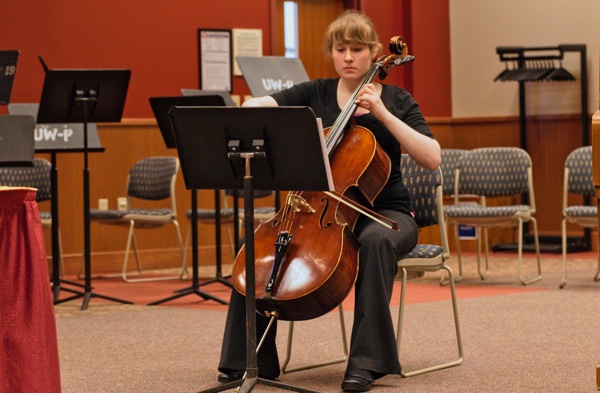
I had the wonderful opportunity to attend the 2010 Wisconsin Solo & Ensemble Festival. It is a true delight to enjoy the results of student and teacher practice, dedication and perseverance.
I very much appreciate the extra effort provided by some teachers on behalf of our children.
I thought about those teachers today when I received an email from a reader asking why I continue to publish this site. This reader referred to ongoing school bureaucratic intransigence on reading, particularly in light of the poor results (Alan Borsuk raises the specter of a looming Wisconsin "reading war").
I'll respond briefly here.
Many years ago, I had a Vietnam Vet as my high school government teacher. This guy, took what was probably an easy A for many and turned it into a superb, challenging class. He drilled the constitution, Bill of Rights, Federalist Papers and the revolutionary climate into our brains.
Some more than others.
I don't have the ability to stop earmark, spending or lobbying excesses in Washington, nor at the State, or perhaps even local levels. I do have the opportunity to help, in a very small way, provide a communication system (blog, rss and enewsletter) for those interested in K-12 matters, including our $400M+ Madison School District. There is much to do and I am grateful for those parents, citizens, teachers and administrators who are trying very hard to provide a better education for our children.
It is always a treat to see professionals who go the extra mile. I am thankful for such wonderful, generous people. Saturday's WSMA event was a timely reminder of the many special people around our children.
Newsletter signup | Send us your ideas
De La Salle and Foreman High Schools battled for the 4A state basketball sectional semifinals March 10 in a packed Maywood gym, but in many ways, the most interesting action was unfolding in the north bleachers. There, two rows up from the floor, Daniel Poneman held court in his usual fashion.Every few moments, Mr. Poneman stood up to greet someone he knew, and by the end of the evening, it seemed as if he had exchanged handshakes and hugs with half of those in attendance. The gym was one giant flowchart before him. Even as Mr. Poneman tracked the action, a recruiter from Purdue, a local basketball legend, and a former Foreman coach who has since moved to Niles North High School all passed -- very noticed -- before Mr. Poneman's well-trained eyes.
"I really wouldn't call him a scout," said Nate Pomeday, an assistant coach at Oregon State. "I would call him more of a professional networker."
Newsletter signup | Send us your ideas
Check out at the boys' basketball rosters for Friendship Collegiate and the Kamit Institute for Magnificent Achievers and the number of transfers on each team is striking. Nearly all of the players on both rosters started their high school careers elsewhere before transferring to one of the two D.C. public charter schools."We're cleaning up, we're the last stop," KIMA Coach Levet Brown said. "Do you think I could get a Eugene McCrory if he was doing well somewhere else?"
Indeed, McCrory -- who has committed to play for Seton Hall and was selected to play in the Capital Classic -- attended C.H. Flowers and Parkdale in Prince George's County and Paul VI Catholic in Fairfax during his first three years of high school.
Newsletter signup | Send us your ideas
Good morning. U.S. Secretary of Education Arne Duncan must be fairly pleased with the NCAA tournament results so far. Of the 12 teams he branded as unworthy of being in the tourney because of their graduation rates, eight have been knocked off.Gone from the "Dirty Dozen" that didn't meet Duncan's standard of at least a 40% grad rate: Arkansas-Pine Bluff (29%), California (20%), Clemson (37%), Georgia Tech (38%), Louisville (38%), Maryland (8%), Missouri (36%), New Mexico State (36%).
Still alive in the Sweet 16: Baylor (36%), Kentucky (31%), Tennessee (30%), Washington (29%). Washington will be an underdog to West Virginia, as will be Tennessee to Ohio State. Baylor will be favored over St. Mary's, and the most interesting matchup of the minds will be Kentucky, facing the Ivy League's Cornell.
Newsletter signup | Send us your ideas
For the fifth consecutive year, Inside Higher Ed presents its Academic Performance Tournament - a unique look at what the National Collegiate Athletic Association's Division I Men's Basketball Tournament would look like if teams advanced based solely on their outcomes in the classroom.The winners were determined using the NCAA's Academic Progress Rate, a nationally comparable score that gives points to teams whose players stay in good academic standing and remain enrolled from semester to semester. When teams had the same Academic Progress Rates, the tie was broken using the NCAA's Graduation Success Rate - which, unlike the federal rate, considers transfers and does not punish teams whose athletes leave college before graduation if they leave in good academic standing.
Newsletter signup | Send us your ideas
The football players at Calvin Coolidge Senior High School, Mayor Adrian Fenty and a room full of cheering staff needed only one word to describe her: coach.Natalie Randolph, a 29-year-old biology and environmental sciences teacher, was introduced Friday as the coach of the school's Coolidge Colts. She's believed to be the nation's only female head coach of a high school varsity football team.
"While I'm proud to be part of what this all means," Randolph said, "being female has nothing to do with it. I love football. I love football, I love teaching, I love these kids. My being female has nothing to do with my support and respect for my players on the field and in the classroom."
The news conference drew the kind of attention usually reserved for the Washington Redskins and was delayed nearly two hours so Fenty, who is up for re-election this year, could be there and proclaim "Natalie Randolph Day" in the city.
Newsletter signup | Send us your ideas
Will Fitzhugh
The Concord Review
February 3, 2010
I got a call the other day from the head football coach at one of the larger state universities.
He said, after the usual greetings, "I've got some real problems."
"Like what?" I asked.
"The players I am getting now are out of shape, they don't know how to block or tackle, then can't read the playbook and they can't follow their assignments."
"That does sound bad. What is your record this season?"
"The teams we play seem to have similar problems, so all our games are pretty sad affairs, ending in scoreless ties."
"Also," he told me, "During breaks in practice, most of them are text-messaging their friends, and almost half of them just drop out of college after a year or two !"
"Have you talked to any of the high school coaches who send you players?"
"No, I don't know them."
"Have you visited any of the high school games or practices?"
"No, I really don't have time for that sort of thing."
"Well, have you heard there is a big new push for Common National Athletic Standards?"
"No, but do you think that will help solve my problems? Are they really specific this time, for a change?"
"Absolutely," I said. "They want to require high school students, before they graduate, to be able to do five sit-ups, five pushups, and to run 100 yards without stopping. They also recommend that students spend at least an hour a week playing catch with a ball!"
"That is a start, I guess, but I don't think it will help me much with my problem. My U.S. players have just not been prepared at all for college football. I have a couple of immigrant kids, from Asia and Eastern Europe, who are in good shape, have been well coached at the secondary level, and they have a degree of motivation to learn and determination to do their best that puts too many of our local kids to shame."
"Well," I said, "what do you think of the idea of getting to know some of the coaches at the high schools which are sending you players, and letting them know the problems that you are having?"
"I could do that, I guess, but I don't know any of them, and we never meet, and I am really too busy at my level, when it comes down to it, to make that effort."
[If we were talking about college history professors, this would not be fiction. They do complain about the basic knowledge of their students, and their inability to read books and write term papers. But like their fictional coaching counterpart, they never talk to high school history teachers (they don't know any), they never visit their classrooms, and they satisfy themselves with criticizing the students they get from the admissions office. Their interest in National Common Academic Standards does not extend to their suggesting that high school students should read complete nonfiction books and write a serious research paper every year. In short, they, like the fictional head coach, don't really care if students are so poorly prepared for college that half of them drop out, and that most of them do not arrive on campus prepared to do college work. They are really too busy, you see...]
===========
"Teach by Example"
Will Fitzhugh [founder]
Consortium for Varsity Academics® [2007]
The Concord Review [1987]
Ralph Waldo Emerson Prizes [1995]
National Writing Board [1998]
TCR Institute [2002]
730 Boston Post Road, Suite 24
Sudbury, Massachusetts 01776-3371 USA
978-443-0022; 800-331-5007
www.tcr.org; fitzhugh@tcr.org
Varsity Academics®
Newsletter signup | Send us your ideas
Education Secretary Arne Duncan entered some of the most contentious debates in college sports on Thursday when, in a speech at the N.C.A.A. convention, he called for stricter consequences for college teams that do not graduate their athletes and said the N.B.A.'s age-minimum policy sets up young athletes for failure."Why do we allow the N.C.A.A, why do we allow universities, why do we allow sports to be tainted when the vast majority of coaches and athletic directors are striving to instill the right values?" said Duncan, who was a co-captain of his Harvard basketball team and played in an Australian professional league from 1987 until 1991.
He said his time as a college athlete was one of the most valuable periods of his life, but feared the N.B.A.'s age rule, which requires that a player be at least 19 years old and at least one year removed from high school before entering the league, does a disservice to athletes.
Newsletter signup | Send us your ideas
They call this McCoy Country - or TuscolTa, with a Texas Longhorn "T" dropped in for good measure.This tiny West Texas outpost is home to quarterback Colt McCoy. It doesn't matter that he's getting ready to lead his second-ranked Longhorns against No. 1 Alabama for the national title, or that his dad (a coach) moved the family for another job about the same time he left for Austin nearly five years ago.
"I don't go back probably as much as I should, but when I do I really enjoy it," McCoy said Sunday in Newport Beach, Calif., where the Longhorns are based this week. "There's a lot of down-to-earth people. They really keep in touch with me. They support me. That really is pretty neat.
"I wouldn't change where I came from at all."
It's evident his hometown loves McCoy right back.
Newsletter signup | Send us your ideas
Dan Abendschein, via a kind reader's email:
Their journey to the 121st Rose Parade is a marvel even to the Ohio State School for the Blind's marching band leader Dan Kelly.Happy New Year!"It's very exciting," said Kelly, who also teaches technology at the school. "It started small, but it's grown and snowballed - and here we are."
Back in 1998, the Ohio State School for the Blind's music program involved only vocal music. Now, just over a decade later, the school's marching band will perform in one of the world's top showcases for marching bands - the first blind band ever to march in the Rose Parade.
The band was one of 19 that performed at the two-day Bandfest, which ended Wednesday at Pasadena City College's football field. It featured all of the marching bands that will appear in the Rose Parade.
But the event also gives the bands a chance to showcase their performance abilities in a larger arena, performing formations they will not be able to do at the parade.
Newsletter signup | Send us your ideas
Institute for Diversity and Ethics in Sports [182K PDF]:
Overall academic progress continued while the gap between white and African‐American football student‐athletes increased slightly for the 67* Football Bowl Subdivision (FBS) schools (formerly known as Division I‐A schools) playing in this year's college football bowl games according to a study released today by The Institute for Diversity and Ethics in Sport (TIDES) at the University of Central Florida.Richard Lapchick, the Director of TIDES and the primary author of the study Keeping Score When It Counts: Assessing the 2009‐10 Bowl‐bound College Football Teams - Academic Performance Improves but Race Still Matters, noted that, "The academic success of big time college student‐athletes that grew continuously under the leadership of the late Dr. Myles Brand continued this year and will be part of his legacy. The new study shows additional progress and reinforces the success of Dr. Brand's academic reform package. This year, 91 percent (61 of the 67 schools), the same as in the 2008‐09 report and up from 88 percent in the 2007‐08 report, had at least a 50 percent graduation rate for their football teams; approximately 90 percent of the teams received a score of more than 925 on the NCAA's Academic Progress Rate (APR) versus 88 percent in the 2008‐09 report."
The NCAA created the APR in 2004 as part of an academic reform package designed to more accurately measure student‐athlete's academic success as well as improve graduation rates at member institutions.
Lapchick added that, "In spite of the good news, the study showed that the disturbing gap between white and African‐American football student‐athletes remains a major issue; 21 teams or 31 percent of the bowl‐bound schools graduated less than half of their African‐American football student‐athletes, while only two schools graduated less than half of their white football student‐athletes."
Newsletter signup | Send us your ideas
Betsey Stevenson [317K PDF]:
Previous research has found that male high school athletes experience better outcomes than non-athletes, including higher educational attainment, employment rates, and wages. However, students self-select into athletics so these may be selection effects rather than causal effects. To address this issue, I examine Title IX which provides a unique quasi- experiment in female athletic participation. Between 1972 and 1978 U.S. high schools rapidly increased their female athletic participation rates--to approximately the same level as their male athletic participation rates--in order to comply with Title IX. This paper uses variation in the level of boys' athletic participation across states before Title IX as an instrument for the change in girls' athletic participation over the 1970s. Analyzing differences in outcomes for both the pre- and post-Title IX cohorts across states, I find that a 10-percentage point rise in state-level female sports participation generates a 1 percentage point increase in female college attendance and a 1 to 2 percentage point rise in female labor force participation. Furthermore, greater opportunities to play sports leads to greater female participation in previously male-dominated occupations, particularly for high-skill occupations.
Newsletter signup | Send us your ideas
ata from the NCAA's most recent study on revenue and expenses [6MB PDF Complete Report] at Division I institutions show a slight moderation in the rate of spending in the aggregate within the division and a reduced growth in the gap between the so-called "haves" and "have-nots," though the gap continues to be wide.The report summarizing Division I athletics program finances between 2004 and 2008 also reveals that 25 schools - all in the Football Bowl Subdivision - reported positive net revenue for the 2008 fiscal year, six more than in the 2006 fiscal year. Only 18 FBS institutions, however, have reported revenue over expenses when the data from all five years are aggregated.
The findings make NCAA officials cautiously optimistic that the advice from former NCAA President Myles Brand's Presidential Task Force three years ago to moderate spending is being heeded, though those same officials acknowledge that these data through the end of the 2008 fiscal year (June) do not reflect the subsequent economic downturn that may reveal a different story on spending in next year's report.
Newsletter signup | Send us your ideas
With a concussion, there is no obvious injury - no blood, no swelling, no arm at an awkward angle.Coaches and athletic trainers have to look for subtle signs from an athlete, such as a shake of the head, a vacant expression or a long pause before a football player lines up for the next play.
Until the past few years, a student athlete in Mesquite might have gone back into the game after a quick assessment. But that's changing as officials realize how common concussions are and how profound their effects can be over time.
"If a kid suffers a concussion in Mesquite, they are going to miss a minimum of two weeks," said Bucky Taylor, Mesquite High School's head athletic trainer.
Newsletter signup | Send us your ideas
Few girls who play sports in suburban Philadelphia would recognize Robert H. Landau, but many coaches and athletic directors know that spotting him in the bleachers could spell trouble.With a sharp tongue, a refusal to compromise and a well-honed sense of injustice, Landau is that familiar breed of community activist with a knack for pushing public officials over the edge. His specialty is girls' sports, and his targets are usually wealthy public schools from the Main Line suburbs that pride themselves on being progressive and fair in offering a rich array of opportunities.
No slight to girls is too small for Landau to take on. His victories range from the momentous to the less obvious, like forcing his daughters' school district to provide more athletic choices, pressuring leagues to showcase their title games and getting a school mascot to perform at their games.
Landau's complaint against Haverford High School -- over issues like publicity for and scheduling of boys' and girls' basketball games -- has upset even those who would otherwise support him.
Newsletter signup | Send us your ideas
Purists love to play the game, "Is that a sport?" They'll ask, is synchronized swimming really a sport? Is a dog show? Is poker? Is Ultimate Frisbee? And, the most controversial of all: Is cheerleading a sport?But it isn't just the usual arguments that are raised when cheerleading is the issue. Cheerleading, you see, is deeply embroiled in gender politics, and given the demographics of college attendance, cheerleading is surely going to remain a flashpoint.
It all traces back to Title IX, the 1972 law which mandates that, in sports, athletic representation on campus must mirror student enrollment. As the percentage of collegians tilts more and more female, this means, simply enough, that some men's sports must be eliminated.
Today, at least 57 percent of all American college students are female, and that number is expected to rise. On average in college, there are already 8.7 women's teams for every 7.8 men's teams.
Newsletter signup | Send us your ideas
Faced with a federal lawsuit alleging gender discrimination, the Elmbrook School District has reversed an earlier decision and will allow students from both its high schools to join a girls ice hockey cooperative.Brookfield Central High School freshman Morgan Hollowell and her father, James, sued the School District last month after it refused to join a cooperative with other school districts to offer girls ice hockey, even though the district participates in a similar cooperative for boys ice hockey.
At the time, Elmbrook Superintendent Matt Gibson said the district chose not to join the girls cooperative because too few students were interested in playing the sport and it would be difficult for the district to supervise.
Newsletter signup | Send us your ideas
Whether rallying the crowd at a sporting event or participating in competition, cheerleading can be both fun and physically demanding. Although integral to cheerleading routines, performing stunts can lead to injury. Stunt-related injuries accounted for more than half (60 percent) of U.S. cheerleading injuries from June 2006 through June 2007, according to a new study conducted by researchers at the Center for Injury Research and Policy of The Research Institute at Nationwide Children's Hospital.Published as a series of four separate articles on cheerleading-related injuries in the November issue of the Journal of Athletic Training, the study focused on general cheerleading-related injuries, cheerleading stunt-related injuries, cheerleading fall-related injuries and surfaces used by cheerleaders. Data from the study showed that nearly all (96 percent) of the reported concussions and closed-head injuries were preceded by the cheerleader performing a stunt.
"In our study, stunts were defined as cradles, elevators, extensions, pyramids, single-based stunts, single-leg stunts, stunt-cradle combinations, transitions and miscellaneous partner and group stunts," said author Brenda Shields, research coordinator in the Center for Injury Research and Policy at Nationwide Children's Hospital.
Newsletter signup | Send us your ideas
How many concussions would you allow your child to suffer before you decided that perhaps he or she should retire from the travel soccer team?In the past month alone, I have heard about several dozen injuries to young athletes, both on school and club teams, and I'm starting to wonder how so many families can be obsessed with sports to the point that a child's health suffers.
I've actually heard parents talk about their children's soccer concussions as if they were simple headaches: "He had another concussion last week but should be good to go soon." I know one child who has suffered at least three breaks in his hands from high school football and baseball. His parents know there could be long-term health consequences, but that is less important, somehow, than the glory of youth sports.
There was a story in The Washington Post this month about companies that have redesigned football helmets to cut down on concussions.
Newsletter signup | Send us your ideas
Every year, one or two high school football games bubble to national attention for the wrong reasons.This year two Florida teams engaged in a battle -- if you can call it that -- where the final score was 82 to 0. Then, a few weeks later, the final score in another Florida game was 91 to 0. These are extreme examples, but every week, in nearly every state, teams win by 50 or 60 points.
What does a coach's halftime speech sound like when his team is losing in a blowout?
What if you were John Petrie, coach of the Plainville High School Cardinals in Plainville, Kan., a couple of seasons back, when, in a game against Smith Center he found his team down 72 to 0 in the first quarter?
Newsletter signup | Send us your ideas
Last weekend, two football teams faced off in a fierce divisional rivalry. Both boasted intimidating offenses built around sumo-sized linemen; half of the two teams' centers, guards and tackles tipped the scales above 300 pounds.The teams aren't from the NFL. They aren't big-time colleges, or even Division II or III squads. They are the Central Texas high schools of McNeil and Cedar Park. The largest of their linemen is approaching 350 pounds.
Once a rarity, teenaged mega-players have become a common sight under the Friday night lights. "If you were to weigh the lines of high school football teams, they're significantly higher in recent years," said Brian Carr, a physical therapist and trainer at Georgetown High School. "Compared to just 15 years ago, there's a huge difference."
Doctors and trainers are reporting increases in certain injuries -- stress-related muscle and ligament tears, knee strains and foot fractures -- that can be directly attributed to the strains placed on developing bodies by extra bulk. Weight-related medical problems are also beginning to crop up among the giant teenagers.
Newsletter signup | Send us your ideas
Last Friday, as on all football Fridays at state champion Canadian High School, a black-and-gold flag flew along Main Street outside the City Drug Soda Fountain. A painted sign spelled out Wildcats on the window at Treasure's Beauty Salon. Up the street, at the Hemphill County Courthouse, Sally Henderson showed off the paw-print design on her black-and-gold fingernails.Until a nail salon opened over the summer in this tiny, wealthy and ambitious Panhandle town, Henderson drove 45 miles to Pampa or 100 miles to Amarillo to have her nails done for football games and holidays.
"My husband is so glad I don't have to drive anymore," said Henderson, 52, a cheery administrative assistant to the county judge and the wife of the county sheriff. "I'd stop and do Wal-Mart, and every time I got my nails done, I'd spend $300."
Newsletter signup | Send us your ideas
Seattle Public Schools may do away with a nearly decade-old requirement that all students earn a C average to graduate, and an even-older policy that athletes maintain a C average to play on school teams.If the School Board approves recommendations endorsed by Superintendent Maria Goodloe-Johnson, as well as most district high-school principals and counselors, a D average will be good enough to earn a high-school diploma. Student athletes would need to pass five of six classes with D grades or better.
District officials understand there are concerns about relaxing standards at a time when everyone from President Obama on down is pushing for higher expectations for U.S. students.
And when surveyed by the district last year, a majority of Seattle parents and students preferred to keep the C-average requirement.
But district officials, who plan to talk about the proposal at a School Board meeting tonight, insist they're not watering down expectations, and the change would mirror what most other districts require.
Newsletter signup | Send us your ideas
http://online.wsj.com/article/SB125150176952368293.html:
A new Texas law that could double the amount of academic credit high-school athletes receive for playing sports is stoking a long-standing debate in the Lone Star State about whether athletics should count the same as schoolwork.Texas is unusual in that high-school sports aren't completely extracurricular. The state has long allowed students who are members of sports teams to take one athletics class during a normal school day, a period that can be filled with anything from watching game films and weight lifting to sitting in study hall.
The state formerly permitted high schoolers to apply only two credits -- or two years' worth -- of athletics classes toward the 26 credits needed to graduate. But a law passed by the Texas legislature in May effectively increased the number of such credits that can apply toward the degree to four.
Coaches and athletic directors welcomed the change, which they had sought from the Texas Board of Education for the past two years.
"We think it's a good idea to allow parents and kids to have some flexibility," said Robert Young, athletic director at Klein Independent School District.
The Texas State Teachers Association also supported the increase in athletics credits, saying it gives students more opportunities to take classes that interest them the most.
Newsletter signup | Send us your ideas

Newsletter signup | Send us your ideas
NPR is kicking off a new project Friday. Sports correspondents Tom Goldman and Mike are going to take the field with high school football teams across the country this season. They will go to practices and games, hit the weight room and sit in the stands with the boosters.
Newsletter signup | Send us your ideas
The Concord Review
13 August 2009
Today's Boston Globe has a good-sized article on "Hot Prospects,"--local high school football players facing "increasing pressure from recruiters to make their college decisions early."
That's right, it is not the colleges that are getting pressure from outstanding students seeking admission based on their academic achievement, it is colleges putting pressure on high school athletes to get them to "sign" with the college.
The colleges are required by the AAU to wait until the prospect is a Senior in high school before engaging in active recruiting including "visits and contact from college coaches," and, for some local football players the recruiting pressure even comes from such universities as Harvard and Stanford.
Perhaps Senior year officially starts in June, because the Globe reports that one high school tight end from Wellesley, Massachusetts, for example, "committed to Stanford in early June, ending the suspense of the region's top player."
The University of Connecticut "made an offer to" an athletic quarterback from Natick High School, "and a host of others, including Harvard and Stanford, are interested," says the Globe.
In the meantime, high school football players are clearly not being recruited by college professors for their outstanding academic work. When it comes to academic achievement, high school students have to apply to colleges and wait until the college decides whether they will be admitted or not. Some students apply for "Early Decision," but in that case, it is the college, not the athlete, who makes the decision to "commit."
Intelligent and diligent high school students who manage achievement in academics even at the high level of accomplishment of their football-playing peers who are being contacted, visited, and recruited by college coaches, do not find that they are contacted, visited, or recruited by college professors, no matter how outstanding their high school academic work may be.
In some other countries, the respect for academic work is somewhat different. One student, who earned the International Baccalaureate Diploma and had his 15,000-word independent study essay on the Soviet-Afghan War published in The Concord Review last year, was accepted to Christ Church College, Oxford, from high school. He reported to me that during the interview he had with tutors from that college, "they spent a lot of time talking to me about my TCR essay in the interview." He went on to say: "Oxford doesn't recognize or consider extra-curriculars/sports in the admissions process (no rowing recruits) because they are so focused on academics. So I thought it was pretty high praise of the Review that they were so interested in my essay (at that time it had not won the Ralph Waldo Emerson Prize)."
There are many other examples from other countries of the emphasis placed on academic achievement and the lack of emphasis on sports and other non-academic activities, perhaps especially in Asian countries.
One young lady, a student at Boston Latin School, back from a Junior year abroad at a high school in Beijing, reported in the Boston Globe that: "Chinese students, especially those in large cities or prosperous suburbs and counties and even some in impoverished rural areas, have a more rigorous curriculum than any American student, whether at Charlestown High, Boston Latin, or Exeter. These students work under pressure greater than the vast majority of U.S. students could imagine...teachers encourage outside reading of histories rather than fiction."
That is not to say that American (and foreign) high school students who do the work to get their history research papers published in The Concord Review don't get into colleges. So far, ninety have gone to Harvard, seventy-four to Yale, twelve to Oxford, and so on, but the point is that, unlike their football-paying peers, they are not contacted, visited and recruited in the same way.
The bottom line is that American colleges and universities, from their need to have competitive sports teams, are sending the message to all of our high school students (and their teachers) that, while academic achievement may help students get into college one day, what colleges are really interested in, and willing to contact them about, and visit them about, and take them for college visits about, and recruit them for, is their athletic achievement, not their academic achievement. What a stupid, self-defeating message to keep sending to our academically diligent secondary students (and their diligent teachers)!!
"Teach by Example"
Will Fitzhugh [founder]
Consortium for Varsity Academics® [2007]
The Concord Review [1987]
Ralph Waldo Emerson Prizes [1995]
National Writing Board [1998]
TCR Institute [2002]
730 Boston Post Road, Suite 24
Sudbury, Massachusetts 01776 USA
978-443-0022; 800-331-5007
www.tcr.org; fitzhugh@tcr.org
Varsity Academics®
Newsletter signup | Send us your ideas
"How can I help to get these kids a Lapdesk?" - I get this question all the time from my friends and classmates. And I want to have a good answer. An actionable, simple answer such as: "Go to our website, choose a school from the database and buy a Lapdesk for them."So how can our company make this happen? One of my main goals this summer is to launch an online initiative and to develop a plan for scaling it up - creating a home for individual donors who will become "Lapdesk friends".
While our current website www.lapdesk.co.za is functional and rich in information, I want to take it to the next level: to turn it into a dynamic communications platform connecting Lapdesk's partners, sponsors and beneficiaries. I want to enable individuals to donate Lapdesks to a school of their choice and to track our progress - all online.
Newsletter signup | Send us your ideas
On a hot day last August, Max Gilpin, a high-school sophomore from Louisville, Ky., collapsed during a preseason football practice. Three days later, he died from complications of heatstroke. His coach, Jason Stinson, was later indicted for reckless homicide in the first known criminal case of its kind.With high-school football season set to get under way in many parts of the country next month, Max's story, which received widespread media attention, has spurred a nationwide debate about how far high schools should go to prevent heat-related injuries among their athletes.
Last month, the National Athletic Trainers' Association, which represents accredited trainers with a background in sports medicine, issued new heatstroke-prevention guidelines for high schools. These included recommendations to limit the duration and intensity of practice sessions early in the season and in hot weather.
Newsletter signup | Send us your ideas
When it comes to choosing the foods we eat, we have so many choices that it often becomes confusing. As Americans, we are blessed with almost every kind of food imaginable, available right next door at the supermarket. There are, however, some very specific foods that help improve athletic performance. The foods listed below are particular important to keep in your diet. The following foods, in alphabetical order, provide premium fuel for the active athlete.
Newsletter signup | Send us your ideas
In his 11 years as athletic director at the Honolulu's Punahou School Tom Holden never decorated his school's gym walls or outfield fences with championship banners. State titles, of which there have been 61 over the last four years, hold a place in Buff 'n Blue lore, but that's in the trophy case. "We just congratulate among ourselves," said Holden, who retired last Thursday. "Nothing public."Punahou's 19 state titles during the 2008-09 school year were a nice retirement gift for Holden. Now he can add being named Sports Illustrated's top high school program for the second consecutive year. To come up with our top 10, as well as our top programs in each state, we looked for state championships and Division-I scholarship athletes and success on and off the field. Punahou was at the head of the class.
On the mainland, Jesuit High (Portland, Ore.), won seven state titles to rank just behind Punahou. Throughout the country and the District of Columbia, SI.com found schools that exemplified excellence in athletics during all seasons. Here is our top 10:
Newsletter signup | Send us your ideas
The issue of escalating compensation and rising ticket prices in professional sports has been around for years. But next month it could reach a boiling point when 21-year-old Stephen Strasburg, the No. 1 pick in this year's Major League Baseball draft, signs for at least $15 million. And that's just a bonus before salary is even discussed.The blogosphere and radio call-in shows are already buzzing, with people saying things like "Man, the [Washington] Nationals" -- or whatever team ends up signing Mr. Strasburg -- "are sure going to have to raise prices to pay for this guy. You'll be lucky to afford a beer when you go out to the ballpark to see him pitch."
Well, if you can't afford to buy a beer at the ballpark then it didn't do the team much good to sign the player, did it? Sportswriters and radio guys delight in reminding fans that every time a team acquires an expensive player the cost of everything goes up. But that's just not the way economics works.
Newsletter signup | Send us your ideas
or some time, coaches have grumbled that the AAU's emphasis on building stars and playing games over practicing produces a lot of talented prospects who have great physical skills but limited knowledge of the fundamentals. Now some players are speaking out.I am no NBA fan, having attended my last game, in I think, 1972 - a Milwaukee Bucks playoff game. A one dimensional game is not all that interesting, particularly via sky high ticket prices.
By the middle of the last NBA season, as concerns build about his dwindling playing time and rough transition to the NBA, last year's No. 2 overall pick, Michael Beasley of the Miami Heat, finally conceded a fundamental flaw: No one, at any level in his basketball career, had asked him to play defense. And especially not in AAU. "If you're playing defense in AAU, you don't need to be playing," he says. "I've honestly never seen anyone play defense in AAU."
An AAU official declined to comment for this article.
The chorus of critics ranges from AAU player Alex Oriakhi, a McDonald's All-American center who plans to play for the University of Connecticut, who says shooting guards he's seen in AAU are in for a "rude awakening" to USA Basketball officials and NBA coaches.
Founded in 1888, the AAU's first goal was to represent American sports internationally. AAU teams blossomed in many sports, and the organization became a driving force in preparing Olympic athletes. In 1978, the Amateur Sports Act established a governing body for American Olympic sports, usurping the AAU's role as an Olympic launching pad. Its most notable sport today is basketball, where it counts Magic Johnson, Shaquille O'Neal and LeBron James among its alumni.
Newsletter signup | Send us your ideas
In high schools in and around Washington, artificial turf is becoming an athletic status symbol.Synthetic ballfields can be found at 10 public high schools in the District, seven in Anne Arundel County, four in Fairfax County and three in Arlington County. They have been installed at T.C. Williams High in Alexandria, Richard Montgomery High in Rockville, North Point High in Waldorf and a host of private and parochial schools. This summer and over the next school year, several more high schools will get artificial turf: Chesapeake and Old Mill in Anne Arundel, Lee in Fairfax, Bell-Lincoln in the District, and Walter Johnson and Montgomery Blair in Montgomery.
In most communities, the prospect of replacing real grass with plastic fiber and bits of shredded tire has prevailed with support from coaches and athletic boosters and little public dissent. But debate has emerged in Montgomery over such matters as how the turf deals were structured and whether tire crumbs from the fields might contaminate property nearby.
Newsletter signup | Send us your ideas
AP:
Tyler Peters has wrapped up his high school athletic career. Now he can only feel sympathy for his friends who are underclassmen at Coral Gables Senior High.Across the country this spring, the recession has taken its toll on high school athletic programs. As states and school districts have tried to shore up their budgets, Florida has taken some of the most drastic steps.
The Florida High School Athletic Association is considering sweeping, two-year schedule changes with all sports except football canceling some matches, meets or games. The changes were approved earlier this year, but officials backed off the plan, saying they would take it up again at a later date.
A swimmer in high school, the 18-year-old Peters said he might have given it up if his season had been cut down.
Newsletter signup | Send us your ideas
The Cougars of Middle School 61 had a basketball game in the Bronx, but a half-hour before tipoff, six girls and Coach Bryan Mariner were still inching through traffic in Brooklyn.A cellphone rang. It belonged to forward Tiffany Fields-Binning, who passed the phone to Mr. Mariner.
"You don't want her to go?" he said. He peered up at a street sign. "We're on Atlantic and Flatbush." He paused. "O.K. O.K. We'll wait here."
Mr. Mariner turned off the ignition. "Tiff-a-ny." He said her name slowly, like a sigh. "You didn't set this straight with your pop?"
Tiffany stared out a window.
Mr. Mariner turned and assessed the situation: "We've got five."
Five players. No substitutes.
Newsletter signup | Send us your ideas
Keith Hennig has a 3-year-old boy named Trevor and a 1-year-old named Brady. He wants to watch them grow up. Not in the brief moments between school and basketball practice. Not in the late-night hours when he would get home from a game or an open gym."I hate it during the winter season because I leave when it's dark out, and when I come home it's dark out," Hennig says. "It's almost depressing."
Long before he led the Kentwood High girls basketball team to the state championship in March, Hennig, only 32, had decided that it would be his last season. But Hennig discovered that, as with any addiction, it's one thing to decide to quit. It's quite another to go through with it.
For two weeks after the championship game, he walked past the state championship trophy every day and saw his girls in the halls at Kentwood, where he is a history teacher. He remembered all those moments that made the late nights and early mornings worth it. He was going through withdrawal.
Newsletter signup | Send us your ideas
The second principle was more important. Ranadivé was puzzled by the way Americans played basketball. He is from Mumbai. He grew up with cricket and soccer. He would never forget the first time he saw a basketball game. He thought it was mindless. Team A would score and then immediately retreat to its own end of the court. Team B would inbound the ball and dribble it into Team A's end, where Team A was patiently waiting. Then the process would reverse itself. A basketball court was ninety-four feet long. But most of the time a team defended only about twenty-four feet of that, conceding the other seventy feet. Occasionally, teams would play a full-court press--that is, they would contest their opponent's attempt to advance the ball up the court. But they would do it for only a few minutes at a time. It was as if there were a kind of conspiracy in the basketball world about the way the game ought to be played, and Ranadivé thought that that conspiracy had the effect of widening the gap between good teams and weak teams. Good teams, after all, had players who were tall and could dribble and shoot well; they could crisply execute their carefully prepared plays in their opponent's end. Why, then, did weak teams play in a way that made it easy for good teams to do the very things that made them so good?
Newsletter signup | Send us your ideas
The Boston Globe has been publishing for 137 years, and the news that it may have to fold has distressed its many readers. Each Fall, Winter and Spring the paper publishes a special section, of 14 pages or so, on notable local public high school athletes and their coaches. There is a mention of athletes and coaches at local prep schools as well.
The latest Boston Globe's Winter "ALL-SCHOLASTICS" section arrived, with the "ten moments that stood out among the countless athletic stories in Massachusetts." There are reports on the best athletes and coaches in Skiing, Boys' Basketball, Girls' Basketball, Boys' Hockey, Girls' Hockey, Boys' Track, Girls' Track, Boys' Swimming, Girls' Swimming, Preps, Wrestling, and Gymnastics. The Preps and Gymnastics parts consolidate boys' and girls' accomplishments, perhaps to save space (and cost).
Each full-page section also features photographs of 9-16 athletes, with perhaps a twitter-sized paragraph on their achievements. In addition, there are 30 photos and tweets about some coaches, spread among the various sports. There are 26 "Prep" athletes mentioned, from various sports, but I didn't see any "Prep" coaches profiled. For each high school sport there are two "athletes of the year" identified, and all the coaches are "coaches of the year" in their sport.
There may be, at this time, some high school "students of the year" in English, math, Chinese, physics, Latin, chemistry, European history, U.S. history, biology, and the like. There may also be high school "teachers of the year" in these and other academic subjects, but their names and descriptions are not to be found in The Boston Globe, perhaps the most well-known paper in the "Athens of America" (Boston).
It may be the case, indeed it probably is the case, that some of the athletes featured in the Winter "All-Scholastics" section today are also high school students of math, history, English, science, and languages, but you would not know that from the coverage of The Boston Globe. The coaches of the year may in many, if not all, cases, also be teachers of academic subjects in the Massachusetts public and private schools, but that remains only a guess as well.
When the British architect Christopher Wren was buried in 1723, part of his epitaph, written by his eldest son, Christopher Wren, Jr., read: "Lector, si monumentum requiris, Circumspice." If you wanted to judge his interest, efforts and accomplishments, all you had to do was look around you. His work was there for all to see.
The work of Massachusetts high school athletes and coaches is all around us in The Boston Globe on a regular basis, but the work of our high school scholars and teachers is nowhere to be seen in that public record.
If one seeks a monument to anti-academic and anti-intellectual views and practices in Boston today, one need look no further than The Boston Globe. I read it every day, and I will be sorry to see it fold, if it does, but I will not miss its attention to and recognition of the academic efforts and accomplishments of Massachusetts secondary students and their teachers, because there is none now, and never has been any, no matter how many reports on education reform and academic standards it may have published over the years. If you ask how much The Boston Globe editors (and I am sure The Globe is not alone in this) cares about the good academic work now actually being done by high school teachers and their students in Massachusetts, the answer is, from the evidence, that they do not.
Newsletter signup | Send us your ideas
Most high school athletes will spend fewer nights under the stadium lights next year, as the state's athletic board shortens the season for many sports.The Florida High School Athletic Association voted Monday to cut costs by reducing varsity seasons by 20 percent and junior varsity seasons by 40 percent. Football and cheerleading are exempt.
"Football is a moneymaker and most others are not," said Lanness Robinson, Athletic Director for public schools in Hillsborough County.
FHSAA could not provide specifics for the estimated cost savings. A spokeswoman said the board had the backing of school districts and superintendents. She said an across-the-board schedule reduction would spare some sports from total elimination.
Newsletter signup | Send us your ideas
Jeremy Tyler, a 6-foot-11 high school junior whom some consider the best American big man since Greg Oden, says he will be taking a new path to the N.B.A. He has left San Diego High School and said this week that he would skip his senior year to play professionally in Europe.
Tyler, 17, would become the first United States-born player to leave high school early to play professionally overseas. He is expected to return in two years, when he is projected to be a top pick, if not the No. 1 pick, in the 2011 N.B.A. draft.
Tyler, who had orally committed to play for Rick Pitino at Louisville, has yet to sign with an agent or a professional team. His likely destination is Spain, though teams from other European leagues have shown interest. A spokesman for Louisville said the university could not comment about Tyler.
“Nowadays people look to college for more off-the-court stuff versus being in the gym and getting better,” Tyler said. “If you’re really focused on getting better, you go play pro somewhere. Pro guys will get you way better than playing against college guys.”
Newsletter signup | Send us your ideas
There haven't been many upsets in this year's NCAA men's basketball tournament, as big name basketball powerhouses have dominated the hardwood. But evaluate the Sweet Sixteen based on the most important academic competition of studying for and obtaining a meaningful degree and you'll find that most of the top teams wouldn't even come close to cutting down the nets in Detroit early next month.
Higher Ed Watch's third annual Academic Sweet Sixteen examines the remaining teams in the NCAA men's basketball tournament to see which squads are matching their on-court success with academic achievement in the classroom. And for the third consecutive year, academic indicators produce a championship game match-up that isn't on anyone's radar: Purdue versus Villanova, with Purdue's 80 percent graduation rate trumping Villanova's 67 percent. The University of North Carolina and Michigan State, meanwhile, round out the Final Four with graduation rates of 60 percent.
Newsletter signup | Send us your ideas
After school on a recent afternoon, Allonzo Trier, a sixth grader in Federal Way, outside Seattle, came home and quickly changed into his workout gear -- Nike high-tops, baggy basketball shorts and a sleeveless T-shirt that hung loosely on his 5-foot-5, 110-pound frame. Inside a small gymnasium near the entrance of his apartment complex, he got right to his practice routine, one he has maintained for the last four years, seven days a week. He began by dribbling a basketball around the perimeter of the court, weaving it around his back and through his legs. After a few minutes, he took a second basketball out of a mesh bag and dribbled both balls, crisscrossing them through his legs. It looked like showboating, Harlem Globetrotters kind of stuff, but the drills, which Trier discovered on the Internet, were based on the childhood workouts of Pete Maravich and have helped nurture his exquisite control of the ball in game settings -- and, by extension, his burgeoning national reputation.One of the Web sites that tracks young basketball prospects reports that Trier plays with "style and punch" and "handles the pill" -- the ball -- "like a yo-yo." He is a darling of the so-called grass-roots basketball scene and a star on the A.A.U. circuit -- which stands for Amateur Athletic Union but whose practices mock traditional definitions of amateurism.
Newsletter signup | Send us your ideas
Rosanlind Rossi & Steve Tucker:
Chicago public school coaches are in for a crackdown under a proposed city policy that explicitly bans everything from pushing, pinching or paddling athletes to "displays of temper.''The massive overhaul of the Chicago Public High Schools Athletic Association bylaws follows allegations that began emerging last fall that at least four CPS coaches had paddled or hit athletes.
The new policy creates the possibility that coaches can be banned for life for just one rule violation. Previously, such punishment followed only "knowing and repeated'' rule violations.
It also mandates annual coaching training, requires that all coaches undergo criminal background checks and fingerprint analysis, and establishes a "pool'' of thoroughly screened candidates from which principals must now pick their coaches.
Prohibitions against corporal punishment and even "forcing a student to stand or kneel for an inordinate time" were listed elsewhere in CPS policy, but after the paddling scandal, CPS wanted to take a clear stand against a wide variety of corporal punishment, said CPS counsel Patrick Rocks.
Newsletter signup | Send us your ideas
Newsletter signup | Send us your ideas
Travis Henry was rattling off his children's ages, which range from 3 to 11. He paused and took a breath before finishing.This was no simple task. Henry, 30, a former N.F.L. running back who played for three teams from 2001 to 2007, has nine children -- each by a different mother, some born as closely as a few months apart.
Reports of Henry's prolific procreating, generated by child-support disputes, have highlighted how futile the N.F.L.'s attempts can be at educating its players about making wise choices. The disputes have even eclipsed the attention he received after he was indicted on charges of cocaine trafficking.
"They've got my blood; I've got to deal with it," Henry said of fiscal responsibilities to his children. He spoke by telephone from his Denver residence, where he was under house arrest until recently for the drug matter.
Henry had just returned from Atlanta, where a judge showed little sympathy for his predicament during a hearing and declined to lower monthly payments from $3,000 for a 4-year-old son.
Newsletter signup | Send us your ideas
With the announcement of the new Summit Credit Union Baseball Field, Sun Prairie has likely become the first Dane County school district to sell the naming rights for a specific school facility.And the high school's varsity baseball field could be just the beginning: District officials want to sell naming rights to everything from the classrooms and the cafeteria to trophy cases and field lights at the new high school slated to open in the fall of 2010.
"Our goal is to have as many of the big items named before the school opens," said Jim McCourt, Sun Prairie School Board treasurer and member of the Naming Rights Subcommittee.
The subcommittee has a tentative goal of selling more than $3 million in naming rights. However, district officials say business or individual monikers would be presented tactfully, such as a plaque bearing a person's name on the back of an auditorium seat or above a classroom doorway.
"It's not like we're going to have banners all over the school," McCourt said.
On Tuesday the district announced Summit Credit Union as the first company to be granted naming rights for a district facility, under the new policy to allow for names of businesses attached to facilities, in exchange for donations.
The School Board approved the naming rights agreement with Summit on Monday night, which will be in effect for 20 years. The credit union donated $99,537, which pays for about a third of the cost of the field that will have artificial turf on the infield.
Newsletter signup | Send us your ideas
Madison Memorial has had a pretty good couple of weeks. Last night the boys basketball team won its sixth straight Big Eight conference championship in a rollicking and highly-entertaining showdown with conference runner-up Madison East. Last week, Memorial's boys swimming team won the state championship. Today's State Journal reports that Memorial senior Suvai Gunasekaran will be heading off to Washington as one of the 40 finalists in the Intel Science Talent Search. And last week Memorial senior violinist Ben Seeger was the winner of the Steenbock Youth Music Award in the Bolz Young Artist Competition.
It's also worth pointing out that Suvai will be joined by Gabriela Farfan of West at the Intel Science Talent Search (and so MMSD is supplying 5% of the nation's finalists), and that Ben was joined in the Bolz Young Artists Competition finals by Alice Huang of West (the overall winner) and Ansel Norris of East (and so MMSD supplied 75% of the finalists in this statewide competition).
Madison schools - a diversity of excellence.
Newsletter signup | Send us your ideas
A local kung fu school hopes to cash in on the financial crisis, with more people expected to attend courses to tone up their bodies and get rid of negative emotions.
The Hong Kong Shaolin Wushu Culture Centre in Tai O, Lantau Island, has seen a rise in visitor numbers over the past few months, its low season, and has already received bookings for the summer holidays.Lee Kok-keung, director of the Hong Kong Culture Association, which established the centre in 2006, said the increased interest could have something to do with the economic downturn.
"When the economy is good, people are so busy trading stocks and making money," he said. "But when the economy is going down, people tend to pay more attention to their health.
"Practising kung fu is not only good for the body, but also an ideal way to cheer you up."
Newsletter signup | Send us your ideas
These are members of the recently formed MAISL Ball Handling Squad, called the Purgolders: first- through sixth-grade players from 15 schools and 13 basketball teams. The squad helps the girls improve their dribbling skills while experiencing the thrill of performing in front of a crowd.MAISL stands for Madison Area Independent Sports League and has girls from 13 Madison-area Christian schools. Galuska, David Hackworthy and Luann Tribus coach the girls.
When Tribus' daughter, Kendall, 11, asked to join her brothers, Avery and Clayton, on the Little Badgers boys ball-handling team, Tribus gently broke the news.
"You can't honey, I'm sorry," she told her daughter. "You're a girl."
Kendall was denied a tryout for the boys team.
Newsletter signup | Send us your ideas
AP:
A high school basketball coach has been told he can't hypnotize his players anymore because it sends the wrong message to other schools and could get the students hooked on hypnosis.The St. John High School boys team -- the same team that won state two years ago and finished second last year -- was just 7-6 through last week when coach Clint Kinnamon decided to bring in a hypnotist.
He chose Carl Feril, a Church of Christ minister who also is a clinical family and marriage therapist.
Newsletter signup | Send us your ideas
Times are tough, particularly in our schools. We don't have the money, beleaguered education officials say, for every student who wants to play games after class. Some school sports have to go. Loudoun County is talking about cutting junior varsity lacrosse and all freshman sports. Fairfax County's proposed budget would end girls' gymnastics. Other teams are in jeopardy. The public high schools can't afford them anymore.And yet many people who reflect for a moment will remember their own school days and see this kind of financial austerity as shortsighted, like cutting back on English classes because most kids already speak that language. Many of us remember some competitive activity, usually in high school, that became a vital force in our adolescence. It gave us a self-awareness and self-confidence that changed us forever.
None of us read all of the 481,563 articles published last year on the early life and struggles of the soon-to-be president of the United States, but most of us know that if Barack Obama had not discovered basketball he would not have become the leader he is today. On the opposite end of that scale of significance, I compiled the worst record ever at my high school, 0-14, in league play as the tennis team's No. 1 singles player. I didn't care much about winning. I got some exercise, and something even better. I was a total nerd, but I could strut around with my very own varsity letter, just like the football players. I still carry that morale boost.
Newsletter signup | Send us your ideas
ell that didn't take long; the glow from the inauguration of the first African-American president is rapidly dimming. In President Barack Hussein Obama's (D) Chicago, the school system, recently under the superintendency of new Education Secretary Arne Duncan,
issued the following directives for high school sports competitions.The Public League is taking drastic measures to curb a rash of violence that has erupted at its basketball games in the last week.
Newsletter signup | Send us your ideas
In the weeks following an underage drinking party near Waunakee in September 2007, rumors swirled about why the School District didn't move more quickly to discipline football players who were involved.Though the insinuation in some circles was school officials were dragging their feet to keep Waunakee at full strength in the playoffs, recently released documents show the district investigation was delayed at the insistence of a Dane County sheriff's detective investigating criminal activity at the party.
State law allows law enforcement agencies to release reports that could help school officials discipline students, but individual police departments set their own policies and not everyone agrees on the best policy.
If a police agency is stingy with how it chooses to share information, it can delay the school's ability to mete out swift punishment intended to deter underage drinking in the first place.
In the case of the Waunakee football players, the district got mixed messages from the Dane County Sheriff's Office.
Newsletter signup | Send us your ideas
They are young, but they're not children.They're from all over North America, but right now they'd just like to challenge for basketball championships at a boarding school in Delafield.
They've found a place that has given them a chance to make something out of their dreams.
That's why kids like Carlos Toussaint and Kevin Mays and Devin Johnson and Isaiah Gray are attending St. John's Northwestern Military Academy.
And their approach to school and basketball is why the Lancers are off to a 6-0 start this season, with nothing but bright skies in the forecast.
"The scary thing is that we start three sophomores and a freshman," St. John's Northwestern coach Brian Richert said. "The sky is the limit as to what these guys might be able to achieve down the road."
But to one, Toussaint, it's all about this year. He's the Lancers' only senior starter, and his statistics match his impressive basketball pedigree.
Toussaint's father, Jorge, is the president of Federacion Mexicana de Basquetbol, the Mexican Basketball Federation. That's the organization that organizes national teams at various age levels, up to and including the Olympics, and hires coaches who then select the various squads.
Newsletter signup | Send us your ideas

A proposed $17,624,450 eight lane indoor pool, diving well, fitness center, community activity/wellness pool and a two-level parking deck for Madison West High School was on Monday evening's Madison School Board agenda [441K PDF].
I found this interesting and wondered if funding might come from an earmark (McCain / Feingold on earmarks), or possibly the Obama stimulus (the "splurge", or borrowing on our grandkids credit cards).
Madison Mayor Dave Cieslewicz's wishlist (it includes $14,000,000 for "public pools at Warner Park and Reindahl", but no funds for this, as far as I can see).
I have not seen the details of Wisconsin Governor Jim Doyle's "stimulus" list.
It will be interesting to see how this plays out, in light of the District's strategic plan, academic priorities, other high school facilities and how the operating costs are covered.
Listen to the discussion: 23MB mp3 audio file
Update from Doug Erickson.
Posted by Jim Zellmer at 4:28 PM
Subscribe to this site via RSS/Atom:
Newsletter signup | Send us your ideas
On Sunday, ESPN will televise the Under Armour High School All-America High School football game from the Florida Citrus Bowl in Orlando at 5 p.m. PT.USC and UCLA fans will be able to see several players who have committed to their teams.
For the Trojans, playing on the White team: Santa Ana Mater Dei quarterback Matt Barkley; Calhoun (S.C.) County wide receiver Alshon Jeffrey; and Agoura High offensive lineman Kevin Graf.
For the Bruins, also playing on the White team: Rancho Cucamonga Los Osos quarterback Richard Brehaut; Carson High receiver Morrell Presley; and Kapolei, Hawaii, offensive lineman Stan Hasiak.
Newsletter signup | Send us your ideas
The NCAA Graduation Success Rate (GSR) and the Academic Success Rate (ASR) were developed in response to college and university presidents who wanted graduation data that more accurately reflect the mobility among college students today. Both rates improve on the federally mandated graduation rate by including students who were omitted from the federal calculation.The GSR measures graduation rates at Division I institutions and includes students transferring into the institutions. The GSR also allows institutions to subtract student-athletes who leave their institutions prior to graduation as long as they would have been academically eligible to compete had they remained.
The ASR measures graduation rates at Division II institutions and is very similar to the GSR. The difference is that the ASR also includes those freshmen who were recruited to the institution but did not receive athletics financial aid.
Newsletter signup | Send us your ideas
The Atlanta Journal-Constitution gathered information about athletes' admissions qualifications from 54 public universities nationwide. We surveyed the members of every Bowl Championship Series conference, plus the University of Memphis and the University of Hawaii, two other public schools that finished in the 2007-08 season's football or men's basketball Top 25s.A few links:The information listed here was calculated from data contained in a report, called an NCAA certification self-study, that each school files once every 10 years. Penn State and the University of Pittsburgh refused to provide the information. The University of Kansas and West Virginia University said their most recent NCAA certification self-study did not include the information. Kansas State University deleted all of its sport-by-sport data.
The SAT scores are on the 1600-point scale that predates the addition of an SAT writing component. For schools that reported ACT scores, we derived comparable SAT scores using the NCAA's conversion chart. Some schools refused to provide men's basketball SAT scores on the grounds it would violate the privacy rights of individual athletes.
Newsletter signup | Send us your ideas
Jamestown College athletic director Lawrie Paulson anticipated some would have a skewed view of his school's first-year women's wrestling program."I think for a lot of people who heard 'women's wrestling,' they thought we were going to have a place with mud or Jell-O in there," he said.
Paulson, a 1977 Jamestown College graduate, recalls his college days in the early Title IX years as a time when such women's sports as basketball and volleyball were viewed with similar cynicism.
"This is never going to go; this is never going to go," Paulson said in reference to what skeptics thought of those sports at that time.
Any doubts Paulson had about his school's newest female athletic offering were answered swiftly.
Newsletter signup | Send us your ideas
From the moment he stepped on campus, 320-pound tackle Michael Oher seemed destined to be a star on Mississippi's football team and a failure in its classrooms.Oher was featured in the recent book "Blindside".Oher was the son of a crack-addicted single mom, and as a teen could barely read. His educational record - 11 schools in nine years as he moved from home to home in Memphis - read like an indictment of a failed education system.
But four years later, at a school that graduates fewer than 60 percent of all students within six years, Oher has cleared every hurdle and nearly earned his degree - all that stands between him and graduation are a final semester and workouts for the NFL draft.
"I haven't struggled a bit in college," the All-American offensive lineman says. "It's been a breeze."
It's a tribute to Oher's determination and character, to be sure.
His story also says something about the state of big-time college athletics.
Like a lot of other athletes at Ole Miss and elsewhere, Oher got not only tutoring help but a full range of academic support services throughout his career. At Ole Miss, 14 full-time staffers line up tutors for student-athletes, help them choose classes, monitor study halls and check attendance. More than 60 percent of the Rebels' 390 athletes receive at least some tutoring, and together they averaged about 1,000 sessions a week this fall.
Such services are not unusual.
Newsletter signup | Send us your ideas
Kirsten Bladek had a problem.Three weeks into her senior season on the Monarch High School volleyball team in Colorado, the 5-feet, 10-inch setter found herself warming the bench. Her dream of an athletic scholarship seemed dead -- especially since her family couldn't afford the $1,000 or so that many parents pay these days to hire a private athletic-recruiting counselor.
But then in September, Ms. Bladek spent $39.99 to post her athletic résumé and pictures of her playing on the Web site beRecruited.com. The shots, combined with videos posted later, highlighted her ability to set the ball from in front of her forehead, with arms thrust out like Superman in flight. That display, combined with some telephone campaigning by Kirsten and her mother, got college coaches to start paying attention.
Newsletter signup | Send us your ideas
Basketball is fast becoming China's national sport with teenagers like Wang Chenyang hoping to be its new stars.
Newsletter signup | Send us your ideas
by Yvonne Abraham
Globe Columnist / December 7, 2008
The Boston Globe
The Dorchester Eagles, the powerhouse of their Pop Warner football league, had another undefeated season this year.
Their regional championship earned them a spot in the national playoffs in Florida. Oh, and a week of acute anxiety over how to get there.
It's as messed up as it is predictable. Every year around this time, talented kids and their coaches across the country scramble to raise tens of thousands of dollars so they can compete in the Pop Warner superbowl.
Little Leaguers go to their World Series in Williamsport, Pa., for free. Why do Pop Warner teams have to come up with as much as 45 grand to go to the playoffs they've spent an entire season working toward?
One big reason: unlike Little League, Pop Warner doesn't have its own stadium or dorms. So, for more than a decade now, the Super Bowl has been held at Disney's Wide World of Sports Complex in Orlando.
And under its contract with Pop Warner, Disney has the whole thing locked down. To compete in Disney's pristine facilities, players must stay at Disney hotels and buy passes to its theme parks. They eat in Disney restaurants, with nonrefundable Disney dining cards, and they use Disney transportation.
While all of this might be a logistical dream for organizers, it's a fiscal nightmare for teams.
Adults spend days and nights on the phone pleading for donations. Kids shake cans on corners. Parents hand over cash they can't afford to give.
And all of their labors help pad the coffers of a company that racked up a whopping $4.7 billion in profits last year.
This year, five nights' accommodation with the most basic theme park pass costs $450 per person for a four-bed room. A Disney spokesman said that rate is deeply discounted, though he declined to say by how much. It means Disney collects $360 per room per night--about six times the going rate at the nearby Orlando Vista Hotel.
With 9,000 players and cheerleaders, plus coaches and other supporters descending on Florida this weekend, that's a huge payday for Mickey. Disney could afford to give a big break to needy teams in national championships like this one.
Pop Warner spokesman Jon Butler says he encourages teams to raise money all season long, to avoid the mad scrambles and shortfalls in November. Pop Warner even helps with a couple of programs: In one, teams get to keep 60 percent of the money they make by selling subscriptions to ESPN Magazine.
The other 40 percent? Surprise! It goes to Disney, which owns ESPN.
In some communities, though, people can't afford ESPN magazine, especially now. They can't even afford their kids' $30 registration fees.
Most of the year, Pop Warner says that doesn't matter. The league has done magnificent work for kids, particularly those in poor neighborhoods. It has given them focus, and scholarships, and it has doubtless saved some lives. The way the playoffs work--requiring teams to raise obscene amounts of money that could be put to much better use--is utterly at odds with the organization's philosophy.
On Friday afternoon, the Dorchester kids got on a bus with less than $20,000 in hand, including a $4,000 grant from the NFL. They were still negotiating with Disney over the rest of the costs. They may have to forgo the theme park visits, or the big players' party. They may have to take their bus in search of cheaper fast food. They may be paying down their debt for months.
All season long, their coaches tell the Eagles, "If you have the heart of a champ, then you're going to play like a champion," team president Leslie Goodwin says. "It doesn't matter where you come from."
Except at Disney this week, where it matters a lot.
Abraham is a Globe columnist. Her e-mail address is Abraham@globe.com
© Copyright 2008 Globe Newspaper Company.
Newsletter signup | Send us your ideas
Newsletter signup | Send us your ideas
The sheriff of St. Landry Parish announced in July that an undercover investigation of area gyms had produced the largest anabolic steroid bust ever in this rural Cajun county.In an investigation that has identified about 100 suspected steroid users and 15 dealers in the county, 10 people have been arrested, including two former high school football players, the sheriff said. He added that of those 100 suspected users, as many as 20 were high school athletes. That number stunned educators and law enforcement officials who had considered performance-enhancing drugs to be more of a big-city problem.
"I think there's more steroid use, after talking to my investigators, in sports activities than originally thought," said Bobby J. Guidroz, the sheriff of St. Landry Parish, population 90,000, about two hours west-northwest of New Orleans.
Newsletter signup | Send us your ideas
I'm dropping the pretense of having no rooting interest this week. I'm rooting for Myron Rolle as if he's a blood relative. I'm rooting for his flight from Birmingham, Ala., to Baltimore-Washington International Marshall Airport to be on time. I'm rooting for him to make it to Byrd Stadium by halftime at the very latest, for him to get into uniform and play as many snaps as possible for Florida State. Most of all, I'm rooting for him to wow the panelists in his Rhodes Scholarship interview earlier in the day.Texas Tech and Oklahoma will get the majority of the college football attention this weekend, but Rolle is the best story. He's not the first football player up for one of 32 Rhodes Scholarships. In fact, a Yale defensive back, Casey Gerald, will be in Houston today as one of 13 region finalists. But while Yale is as much a part of college football's history as Florida State, let nobody suggest that the football pressures in the Ivy League match those at a school such as Florida State, where Rolle's defensive coordinator once suggested the kid might be devoting too much time to academics and not enough to football.
Newsletter signup | Send us your ideas
The proposal, which could go into effect as early as next school year, would allow four years of sports to count as elective credits toward graduation instead of the current maximum of two years.The board's 10-5 vote followed often emotional debate, with both Dallas members - Republican Geraldine Miller and Democrat Mavis Knight - voting no.
Supporters said the move would keep kids in school and spur them to do well in academic courses. Critics charged that the plan would de-emphasize academics and return to the days of "football comes first."
Ms. Miller was among the most vocal opponents, insisting the plan would "completely dismantle" many of the education reforms enacted in Texas over the last two decades.
"This takes us back to the way things used to be," she said. "Our school reform movement put everything in perspective, with academics coming first. Now, we are opening the door to water down all the efforts we have made to strengthen standards in our schools."
But Craig Agnew, the Brenham High School coach and teacher who petitioned the board to adopt the rule, said an "unfair burden" exists for student athletes who must meet stringent course requirements to retain their athletic eligibility.
Newsletter signup | Send us your ideas
The rugby practice field at Hyde Leadership Public Charter School bears little resemblance to the manicured lawns of the English boarding school where the sport was born. It is more brown than green, and sirens sometimes drown out the shouts of players. Then there are the occasional interruptions, like when play was briefly halted during a recent practice as a man darted about wildly on a nearby street, calling football plays and evading imaginary tacklers.But this patch of mud and grass is more than the home of what is believed to be the nation's first all-African-American high school rugby team. It is also where a growing number of students have been exposed to a sport they once knew nothing about and to parts of society that once seemed closed to them.
Hyde players have a hard time explaining rugby to friends who do not attend their school and who do not know much about the sport. Others say things like, "You're crazy, that's a white person's sport," said Lawrenn Lee, a senior on the team. One parent, Clifford Lancaster, recalled his reaction when his son Salim announced he was going to play: "My eyes got this big. I said, 'That's a wild sport.' "
Newsletter signup | Send us your ideas
Her dazzling fastball and sizzling bat have been on the radar of college coaches for quite a while. As a junior at Ashland High School, Nicole D'Argento was named the state's softball player of the year.Letters from colleges started arriving for D'Argento, a senior this year, in the summer of 2005, before her freshman year. Now, that stack of letters sits in her living room and "looks at least a foot tall," she said recently with a laugh.
Softball has long been a year-round commitment for D'Argento. Her older brother, Russ, played baseball at Old Dominion and the University of Connecticut after helping propel Ashland High to the Division 3 state title in 2000.
Last spring, Nicole hurled the Clocker softball team to a perfect 28-0 season, and the Division 2 state title. She has a career earned-run average hovering under 0.50 and she will enter her senior season just 16 strikeouts shy of the exclusive 500 mark for her high school career.
With so many colleges lining up for her services, D'Argento made her decision early.
Last fall, she made a nonbinding verbal agreement to attend Boston College, which nosed out the University of Massachusetts at Amherst and the University of Virginia.
Last fall, she made a nonbinding verbal agreement to attend Boston College, which nosed out the University of Massachusetts at Amherst and the University of Virginia.On Wednesday, the first day that nonfootball student-athletes are allowed to officially commit, D'Argento will sign her letter of intent to Boston College, joining a number of other local area athletes who will make their college choice official as early as possible.
It's a decision she is glad to be done with.
"You have no idea," D'Argento said. "All my friends right now are looking at schools, visiting schools. They always tell me how lucky I am. It's such a relief; I couldn't be happier."
The early-signing period starts Wednesday and ends Nov. 19. According to the NCAA, early signees accounted for 52 percent of scholarship athletes that signed for the 2007-2008 academic year, an eight percent increase from 2006-2007.
"For athletes that are getting full scholarships, the early-signing period allows them to cease the recruiting process," said Cindy Scott, Bentley University's assistant athletic director, who oversees compliance for the Waltham school. Before arriving at Bentley in 1997, Scott served as the women's basketball coach at Southern Illinois for 21 seasons. "A lot of them have seen the process begin much earlier for them, sometimes their freshman and sophomore years. It lets them end a stressful process faster, because it's lasted longer for them."
For many athletes such as D'Argento, the process can be stressful. College coaches are not allowed to make direct contact with prospective student-athletes until the July 1 before their senior year. Student-athletes may be contacted by mail and are allowed to call coaches themselves.
Making a decision early relieves a lot of the anxiety, at least for some students.
Elaine Schwaiger, the women's softball coach at Merrimack College, said "most of the time, you can sense what a kid wants and how sure they are of it.
"Some kids know what they want; they have a vision for their future and they're all business. When you have a kid who knows what she wants, the early-signing period is perfect. When you have one that doesn't, it could make things more stressful because it's one more deadline to deal with."
However, Elaine Sortino, University of Massachusetts softball coach, wonders if the early-signing process is "pigeon-holing kids."
"I think that you're seeing fewer multi-sport athletes," said Sortino, entering her 30th season in Amherst.
"We're having dialogue right now with juniors; I can feel their level of stress."
D'Argento has starred at Ashland High, but she was essentially recruited through her play with the Polar Crush, a Worcester-based select team that traveled to showcases all over the country during the summer. Ashland High coach Steve O'Neill said that he never received an inquiry from a college coach regarding D'Argento.
Erik Murphy, a 6-foot-10 senior on the basketball team at St. Mark's School in Southborough, was on the watch list early on. Clemson sent him a mailing before his freshman year, and Boston College made an offer a bit later. His father, Jay, had starred for the Eagles during the Tom Davis era.
He considered BC but verbally committed to the University of Florida in January.
"I never really stressed out," said Murphy, who will sign his letter at St. Mark's on Wednesday. "My dad helped me out a lot because he went through the same thing; we went through all of the visits together. When I did Florida, I knew I was in the right place.
"When I got my first offer from BC, I was real excited, obviously because my dad went there. At first, that was where I thought I was going to end up, but my dad sat me down and had me weigh my options. He told me to take my time, and make my decision based on what I thought was the right fit."
One of his teammates, 6-foot-9 junior Nate Lubick of Southborough, the son of St. Mark's coach Dave Lubick, verbally committed to Georgetown last month.
Weston High pitcher Sahil Bloom, who gave a verbal commitment to Stanford in July, said that he started receiving standard, nonpersonalized letters two to three times per week as a sophomore.
So with the aid of coaches and a personal trainer, he started to get the word out on himself, through e-mails and letters. A leap in his athleticism didn't hurt; his fastball was clocked this summer in the low 90s. By the time he committed to Stanford, a number of other schools were on his trail.
Once things started picking up, Bloom was receiving personalized letters, some of them handwritten.
"You really always want baseball to be fun, and it wasn't for a little while," Bloom said. "I started thinking about recruiting way too much during the high school season. It kind of alienated me from my teammates who weren't going through the process. They couldn't understand what I was going through."
Lincoln-Sudbury Regional High senior Derek Lowe can relate. A senior captain on the football team, he verbally committed to play baseball at William & Mary in August. He recalls receiving at least one call a day.
"It was brutal," he said, laughing and sighing at the memory.
Brendan Hall can be reached at bhall59@hotmail.com.
Newsletter signup | Send us your ideas
When Lori Molitor's 9-year-old daughter, Madison, participates in gymnastics, she wears a heel cushion. After her training session she ices. And before she goes to bed she stretches. All of this is done in hopes of keeping her injury-free as she continues her progression as a budding gymnast.The Verona mother's cautious approach with her daughter was borne partially from observing her eldest daughter deal with injuries while competing in sports, but many parents remain in the dark about the dangers of overtraining.
To address that problem, Harbor Athletic Club will host a presentation on the topic on Tuesday, Nov. 11. Guest speakers include Dr. David Bernhardt, a pediatric physician at UW Sports Medicine, and Kierstin Kloeckner, a personal trainer at the Middleton club.
Their message: Young athletes may think they're indestructible, but they must be treated with care.
Newsletter signup | Send us your ideas
For the 2008 presidential hopefuls, the road to the White House included an extended stay in the field house. No matter which ticket prevails Tuesday, a pair of former high school athletes will run the country come January.Sen. Barack Obama (D-Ill.) was a reserve on the Punahou Academy basketball team that won the 1979 state title in Hawaii. He would be the first serious basketball player to occupy the Oval Office.
Sen. John McCain (R-Ariz.) competed in several sports at Episcopal High School in Alexandria, most notably wrestling.
Newsletter signup | Send us your ideas
NEWARK, Del. -- Students kept filing into the tiny hideaway gym at the University of Delaware, but most seemed interested in swimming and the fitness center, not volleyball. Only 150 or so fans attended Wednesday's match, 200 tops, family and friends tucked into a small set of bleachers.
Elena Delle Donne, a 6-foot-5 middle hitter, took her position near the net and played the way a novice does, dominating at some moments, uncertain at others. She spiked the ball ferociously to end the suspense in a three-set victory over Villanova, but it remained jarring even for her father to see her in the tights and kneepads of volleyball instead of the flowing shorts of basketball.
"If Tom Brady was your son, you would really enjoy that he was a darn good Ping-Pong player, but you'd feel like, Why's he playing Ping-Pong?" Ernie Delle Donne, a real estate developer, said, referring to the New England quarterback.
Only months ago, Elena Delle Donne was the nation's top female high school basketball recruit, a signee with the University of Connecticut, an expected central figure in what many predict will be the Huskies' sixth national title season in 2008-9. After two days of classes last June, though, Delle Donne acknowledged what few athletes of her visibility have ever acknowledged publicly -- she was burned out on basketball at 18
Newsletter signup | Send us your ideas
It's a couple of weeks ago and I am watching the Alabama-Clemson football game. It's a pretty good contest, actually. The Crimson Tide is in the groove against a Top 10 team. But that's not what truly interests me.
I am watching the fans in various states of rabidity, wondering how long it takes to wash all that school-color gunk off your body once you lacquer it on, not to mention what precisely motivates someone to apply such gunk in the first place. I am watching the cheerleaders in their somersaults and squats of perfect synchronism with those slapped-on smiles. I am just watching the crazy spectacle of it all -- frenzy and bloodlust and the low rumble of moans and the high-pitch of screams. I wonder why we need any more studies showing our nation's education system to be in the tank when all you have to do is attend a college football game.
Newsletter signup | Send us your ideas
Intense, highly involved parenting can create star children like golf prodigies Josh and Zach Martin. But it can also come at a cost. What's driving hard-driving parents?Bowie and Julie Martin shuttled their sons for five years to a never-ending series of practices, lessons and games in a half-dozen sports before finally suggesting the boys focus on a single pursuit, golf, the game where the children showed the most promise.
Josh and Zach Martin were 6 and 8.
"I just wanted them to be great at something," Mr. Martin explains.
So far, so good. Today, the Martin family's single-minded pursuit has produced perhaps the two best young golfers living under the same roof anywhere. Their two-bedroom townhouse beside the 17th hole of a golf course in Pinehurst, N.C., is an exhibit space for dozens of oversized silver and crystal trophies that Josh and Zach have won, including 11 at international tournaments.
Newsletter signup | Send us your ideas
The Green Bay Packers will partner with seven Wisconsin high schools to implement the NFL ATLAS & ATHENA Schools Program, a nationally-acclaimed initiative designed to promote healthy living and reduce the use of steroids and other drugs among high school athletes.The high schools, Ashwaubenon, Columbus, De Pere, Gibraltar, New Holstein, Two Rivers and West De Pere, will complete the program sessions during the 2008-09 school year. The schools were chosen based on interviews with program administrators and school-wide commitment from the principal, athletic director and coaches.
This local opportunity was created as a result of a $2.8 million grant from the NFL Youth Football Fund to Oregon Health & Science University (OHSU). The Green Bay Packers, other NFL teams and the NFL Players Association all contribute to the NFL Youth Football Fund. The NFL grant is one of a series of improvements to the NFL and NFL Players Association's policy and program on anabolic steroids and related substances. It will be used to disseminate ATLAS and ATHENA to 36,000 high school athletes and 1,200 coaches in 80 high schools during the 2008-2009 school year. Participating teams include the Arizona Cardinals, Baltimore Ravens, Chicago Bears, Kansas City Chiefs, Miami Dolphins, Minnesota Vikings, Oakland Raiders, Pittsburgh Steelers, San Diego Chargers, San Francisco 49ers, Seattle Seahawks, St. Louis Rams, and Washington Redskins.
Newsletter signup | Send us your ideas
Sure, it's no picnic trying to keep tabs on the many teams from the 119 high schools in 19 conferences around Southern Wisconsin that we try to cover.
But I doubt it's the most difficult job in high school sports.
Of course, that begs th�e question: Who has the toughest job in high school sports?
Is it WIAA executive director Doug Chickering, who must deal with a growing roster of high school sports advocates and their conflicting agendas?
Is it the school board members who love the exposure their district gets when a team makes it to a state tournament but wish someone else would pay the expense of getting them on the field?
Is it the parents who believe their child is being mishandled by their coach and have enough class not to say anything to avoid embarrassing themselves or their child?
Is it the parents who decide to make a stink about the situation, successfully orchestrate the removal of the coach and watch the team struggle to a 2-19 record the next season?
Newsletter signup | Send us your ideas
Schools throughout greater Boston are raising fees for sports and other activities. While it's not a property tax increase, the school fees are yet another way local governments are reaching into the pockets of parents to raise money.North of Boston, for example, Hamilton-Wenham football games will cost close to $100 a pop this fall. That's not for seats on the 50-yard line, but what players who suit up for the Generals pay to play: a $969 user fee, the highest for football in communities north of Boston.
Newsletter signup | Send us your ideas
Frederic J. Fransen
Center for Excellence in Higher Education
Perhaps it's time for college fundraisers to come clean about the differences between giving to colleges and universities and giving to their athletic programs.
When donors give to athletics their gifts may produce visible results (a winning season, perhaps, or an NCAA tournament spot), but such gifts do not help colleges achieve their primary mission: the education of tomorrow's leaders.
Not that there is anything wrong with giving to athletic programs, but a spade needs to be called a spade.
We've all heard the rationalizations. College athletic programs -- especially big-time football and basketball -- boost school spirit and spur alumni giving.
College athletic programs give some students a shot at a college education they wouldn't get otherwise. And sports competition helps us become well-rounded individuals. None of these points is inherently untrue. They're just irrelevant.
Americans, through tax dollars, tuition, and philanthropy, support some 2,500 public and private four-year colleges and universities for a reason: to educate those who will lead and sustain us in the future.
As much as I might enjoy the Indiana Pacers and Indianapolis Colts, their services are fundamentally unnecessary for the survival, prosperity, well-being and enlightenment of the country.
Yet, 26 percent of all dollars donated to Division I-A colleges and universities now go to athletics, according to an analysis published in the April 2007 issue of the Journal of Sport Management. In 1998, the comparable figure was 14.7 percent.
The Chronicle of Higher Education reported late last year that overall spending on sports has been growing "at a rate three times faster than that for spending on the rest of the campus." And for most schools, according to recently released NCAA research, sports program costs exceed revenues. Only the top athletic powerhouses make money -- and, frequently, only when they win.
Where's the money going? Mostly, the money goes to build new stadiums, arenas and practice facilities to showcase the schools' gladiators.
Schools in the six top college athletic conferences received more than $3.9 billion in donations for athletic facilities from 2002 to 2007 alone, the Chronicle of Higher Education says.
The question that needs to be asked is why are schools spending big bucks on athletic facilities for a relative handful of semi-pro athletes when academics should be their focus?
One reason many philanthropists choose to give to college athletics is because they know what they are getting. Who can blame them?
When you donate a large sum of money to support University of Wisconsin athletic programs, you do so because the Badgers have a winning tradition and you hope your gift will help produce additional championships.
When you write the same check to the English or history department, you may never know where the money went.
If education is to be the primary focus of our colleges and universities, officials involved in the "rainmaking" process need to do a better job of demonstrating to donors what their educational gifts accomplish in an equally transparent and powerful way.
They do higher education a disservice when they spend money excessively on the game, while shortchanging the end game: a highly educated workforce to face the competitive challenges of the 21st century -- and a tolerant and enlightened public capable of making intelligent personal and political choices.
That's what we need. And that's what a new field house doesn't buy.
Newsletter signup | Send us your ideas
Michael O'Brien & Scott Powers:
It has happened again.For the second consecutive year, the best basketball player in the state's senior class is packing up and heading to prep school.
Peoria Central guard and Illinois recruit DJ Richardson announced on Monday that he will spend his senior season at Findlay Prep in Henderson, Nev.
That's the same school that Washington's DeAndre Liggins spent his senior year at last season.
"It was my family's idea," Richardson said. "It's because of the ACT. I had a good GPA, just not the ACT. I'm not far off. I just took it two times. I think I could do better. There is no reason to take chances so I'm just going to prep school."
According to Richardson, the Illinois coaching staff gave him a list of prep schools to choose from.
Newsletter signup | Send us your ideas
Johnny Winston Jr. was wearing a powder blue T-shirt, just like the rest of his numerous volunteers at Penn Park early Saturday afternoon.The founder and organizer of the eighth annual Streetball and Block Party that bears his name, Winston said most of his work is done in the months leading up to the event, which was held at Penn Park on Madison's south side.
"The thing pretty much runs itself," Winston said, "but there is tons of prep work that has to be done to pull it off. That's what takes the most time."
However, Winston, who is a city of Madison firefighter, a member of the Madison Metropolitan School District School Board and resident jack-of-all-trades in his community, was ready to make a quick change if necessary.
Newsletter signup | Send us your ideas
Altered test scores, illegal recruiting force decisionAfter a five-month internal investigation by Milwaukee Public Schools officials produced evidence of recruiting and test-score tampering, the Rufus King boys basketball team has been barred from competing in the 2009 state tournament.
Though the tournament ban was an internal sanction, King's basketball program has also been placed on probation for the next two school years by the Wisconsin Interscholastic Athletic Association.
Also, a King assistant boys basketball coach has been fired from his coaching position, although MPS Communications Director Roseann St. Aubin said Wednesday that the former coach was allowed to retain his full-time job at a different MPS facility.
The Journal Sentinel has received a copy of a letter from King principal Marie Newby-Randle that was mailed Wednesday to every family with a student enrolled at King for 2008-'09.
Newsletter signup | Send us your ideas
When Allison Meyer was a forward on the Fennimore High School girls basketball team in the mid-1990s, all eyes were on her. On her way to winning all-conference honors her sophomore through senior seasons, Meyer 's play turned quite a few heads.
Now, she 's back at her alma mater turning heads again -- for a different reason.
Earlier this summer, the 29-year-old Meyer was named Fennimore boys varsity basketball coach. She will replace Mark Fifrick, who stepped down after 12 seasons.
Fifrick approached Meyer -- who coached the school 's junior varsity boys team the past two years -- and encouraged her to go after the job.
Newsletter signup | Send us your ideas
Las Vegas is a city known for making and breaking dreams, and that's where hundreds of high school basketball players have converged this week hoping to lock up college scholarships.For five days beginning today, coaches will be out en masse observing and scouting the biggest collection of teenage talent in the nation, with nearly 900 travel teams playing in four tournaments in dozens of high school gyms spread across the city.
In attendance will be the nation's most recognizable college coaches and just about everyone else whose business is basketball, with shoe company and apparel executives, agents and professional scouts joining the Elvis impersonators.The most important requirement for a coach: "If you don't have GPS, you're in trouble," USC assistant Bob Cantu said.
Newsletter signup | Send us your ideas
Texas high school students who play football, basketball and others sports could receive twice as much as credit toward graduation under a proposed rule being considered by the State Board of Education.The proposal — allowing four years of sports to count for credit instead of two — was brought to the board by a coach from Brenham High School, who said new graduation requirements that took effect with freshmen last year discriminate against student athletes by slicing the time available for participation in athletics.
Under the new state requirements — ordered by the Legislature — students need four years each of math, science, English and social studies — the so-called 4x4 core courses — along with their electives and a handful of other required classes such as two years of foreign language and 1 ½ years of physical education.
In all, the number of credits needed to get a diploma will increase from 24 to 26 for students graduating in 2011.
Newsletter signup | Send us your ideas
June 26 - 28, 2008 Nationals webcast.
Newsletter signup | Send us your ideas
Midday recess at Riverside Elementary School had reached a cacophonic pitch Monday, with students tossing assorted balls through the air, when a class of kindergartners added to the mix by bolting around the play area.Far from scolding the children, their teachers encouraged the activity.
What happens on this vast plot of gravel, the thinking goes, can be as important as what goes on inside the classroom.
"When you're talking about education, you have to look at the whole child," Riverside counselor Kara Baker said, "because if they're not well, they're not going to learn."
That focus on wellness has won the school recognition over the past two years, as a Governor's School Health Award silver-level winner.
Riverside was the only Waukesha County school to receive the award in 2008. James Fenimore Cooper School in Milwaukee was a gold award winner.
Newsletter signup | Send us your ideas
Hall of Famer Rod Carew felt right at home Wednesday morning speaking to a group of Temple City High School teachers as part of a traveling education workshop put on by the Hall of Fame, right down to receiving a school hat with a "TC" logo much like his old Minnesota Twins cap as a gift.Carew told the enthralled group of Southern California educators the story of his life and career, from growing up in Panama, to not making his high school team, to being discovered by a Twins scout on a sandlot field in New York, to becoming an 18-time All-Star elected to the Hall of Fame on the first ballot.
Because of his life journey, he often tells kids not to let anybody tell them they can't do something, because anything can happen in life.
"It's OK to dream, because dreams do come true," said Carew, whose career proves that point. "No matter what walk of life you take."
Newsletter signup | Send us your ideas
Memorial Day marks the time high school and college students are anxious for the school year to end and the summer to begin; graduation ceremonies take place and families plan their vacations.Not so fast!
College football coaches and athletes who are going into their senior season of high school football have other plans. For both college staffs and high school athletes, the time period between Memorial Day and Labor Day is extremely important for recruiting.
Newsletter signup | Send us your ideas
While the administrative headaches he has endured this year have played a huge factor in his decision to retire from coaching, Kaehler preferred to talk about why he enjoyed coaching a sport with which he didn't become involved until he was an adult."I was a four-sport athlete. I played football, basketball and baseball and I ran track at Delavan-Darien High School. I've been involved in sports all my life and I played semi-pro basketball in Europe, in Grenoble, France," he said. "I picked up the game of soccer in France. I was there six years and it took me about two years to appreciate the game. What I've always said is that soccer is a player's sport. It's not a coach's sport.
Newsletter signup | Send us your ideas
The only real surprise, coaches and others said, was that Mayo had been accused of taking money from a person described as a “runner” for an agent. Mayo has denied the accusations.“This has been happening over the past few years that agents and runners have been able to get into the high school ranks,” Illinois Coach Bruce Weber said.
In the report, ESPN described how Rodney Guillory, an event promoter with a history of breaking N.C.A.A. rules, started giving gifts to Mayo when he played for Huntington High School in West Virginia. The report said that Guillory did so with money from Bill Duffy Associates, the agency Mayo ultimately signed with in declaring for next month’s N.B.A. draft. Duffy has denied giving money to Guillory for Mayo.
Newsletter signup | Send us your ideas
This afternoon, at the oldest and largest high school regatta in the country, a Fairfax County public school boys' rowing team, in its 19th year, will attempt to win the Stotesbury Cup for the fourth time in five years. It will duel with private schools such as St. Joseph's Prep of Philadelphia, a perennial national power that recently built a $3 million boathouse.Jefferson doesn't have its own million-dollar boathouse. The Fairfax team will row down Philadelphia's Schuylkill River in a boat in which the naming rights of each seat had to be sold to raise $6,100 for the team.
The Jefferson boys' team, one of the most successful high school sports teams in the Washington area, receives no financial funding from Fairfax County. Jefferson's recent success exceeds other area teams, but like all their area public competition, the Colonials must hold fundraisers.
Newsletter signup | Send us your ideas
Everyone knows an athlete who has been sidelined by injury. I can think of two off the top of my head: star football players I knew in high school and college, both of whom suffered career-ending knee injuries and struggled with almost existential crises as they adjusted to life as regular humans instead of campus gods.But in a provocative cover story this week in The New York Times Sunday magazine, "Hurt Girls" (adapted from the forthcoming book Warrior Girls: Protecting Our Daughters Against the Injury Epidemic in Women's Sports), author Michael Sokolove posits that female athletes suffer far greater rates of injury than males. The injury crisis is so severe, relates Sokolove, it casts the whole Title IX revolution in women's sports in a grim light.
"I'm afraid for her and for all these girls," Sokolove quotes the mother of an injured soccer player saying. "What's it going to be like for them at 40 years old? They're in so much pain now. Knees and backs and hips, and they just keep on going.... Are they going to look back and regret it?"
Newsletter signup | Send us your ideas
Williams, 53, is not just any retired player. He has been a shining light of the N.F.L., his name even floated around when the commissionership was open a couple of years ago. And he won awards for citizenship and sportsmanship while playing in two Super Bowls.Before the 1982 Super Bowl near Detroit, not far from his childhood home in Flint, Mich., he told reporters how he had been underachieving in the third grade until his teacher, Geraldine Chapel, sent him off for tests that proved he was quite smart but hard of hearing. The hearing improved, and so did his self-image and his schoolwork.
Williams majored in psychology at Dartmouth and was all-Ivy linebacker for three years as well as an Ivy heavyweight wrestling champion. Undersized at 6 feet and 228 pounds, Williams merged his intelligence and his outsider’s drive to make the Bengals.
Newsletter signup | Send us your ideas
BY THE TIME JANELLE PIERSON SPRINTED ONTO THE FIELD for the start of the Florida high-school soccer playoffs in January, she had competed in hundreds of games since joining her first team at 5. She played soccer year-round — often for two teams at a time when the seasons of her school and club teams overlapped. Like many American children deeply involved in sports, Janelle, a high-school senior, had traveled like a professional athlete since her early teens, routinely flying to out-of-state tournaments. She had given up other sports long ago, quitting basketball and tennis by age 10. There was no time for any of that, and as she put it: “Even if you wanted to keep playing other sports, people would question you. They’d be, like, ‘Why do you want to do that?’ ”Janelle was one of the best players on a very good high-school team, the Lady Raiders of St. Thomas Aquinas High School in Fort Lauderdale. A midfielder and a 2007 first-team, all-Broward-County selection, she had both a sophistication and a fury to her game — she could adroitly put a pass right on the foot of a teammate to set up a goal, and a moment later risk a bone-jarring collision by leaping into the air to head a contested ball.
That she was playing at all on this day, though, was a testament not to her talent but rather to her high threshold for pain, fierce independence and formidable powers of persuasion. Janelle returned to action a little more than five months after having an operation to repair a ruptured anterior cruciate ligament, or A.C.L., in her right knee. And just 20 months before that, she suffered the same injury to her other knee.
Newsletter signup | Send us your ideas
Here, buried in my sixth paragraph, is the most important nugget: we've reached the point in our (disparate) cultural adaptation to computing and communication technology that the younger technical generations are so empowered they are impatient and ready to jettison institutions most of the rest of us tend to think of as essential, central, even immortal. They are ready to dump our schools.There's no question that revolution is in the air. The education process is ripe for change for a number of reasons, including those mentioned by Cringely. We've seen substantial education spending increases over the past decade, which are unlikely to continue growing at the same pace, given other spending priorities such as health care and infrastructure. The ongoing flap over the proposed Madison report card changes is another example of change in the air. Links:Cringely has posted a followup article here.I came to this conclusion recently while attending Brainstorm 2008, a delightful conference for computer people in K-12 schools throughout Wisconsin. They didn't hold breakout sessions on technology battles or tactics, but the idea was in the air. These people were under siege.
I started writing educational software in 1978. The role of instructional technology has changed since then from a gimmick to a novelty to an effort to an essential component of any curriculum. Kids can't go to school today without working on computers. But having said that, in the last five years more and more technical resources have been turned to how to keep technology OUT of our schools. Keeping kids from instant messaging, then text messaging or using their phones in class is a big issue as is how to minimize plagiarism from the Internet. These defensive measures are based on the idea that unbound use of these communication and information technologies is bad, that it keeps students from learning what they must, and hurts their ability to later succeed as adults.
But does it?
These are kids who have never known life without personal computers and cell phones. But far more important, there is emerging a class of students whose PARENTS have never known life without personal computers and cell phones. The Big Kahuna in educational discipline isn't the school, it is the parent. Ward Cleaver rules. But what if Ward puts down his pipe and starts texting? Well he has.
Andy Hertzfeld said Google is the best tool for an aging programmer because it remembers when we cannot. Dave Winer, back in 1996, came to the conclusion that it was better to bookmark information than to cut and paste it. I'm sure today Dave wouldn't bother with the bookmark and would simply search from scratch to get the most relevant result. Both men point to the idea that we're moving from a knowledge economy to a search economy, from a kingdom of static values to those that are dynamic. Education still seems to define knowing as more important than being able to find, yet which do you do more of in your work? And what's wrong with crimping a paragraph here or there from Cringely if it shows you understand the topic?
This is, of course, a huge threat to the education establishment, which tends to have a very deterministic view of how knowledge and accomplishment are obtained - a view that doesn't work well in the search economy. At the same time K-12 educators are being pulled back by No Child Left Behind, they are being pulled forward (they probably see it as pulled askew) by kids abetted by their high-tech Generation Y (yes, we're getting well into Y) parents who are using their Ward Cleaver power not to maintain the status quo but to challenge it.
Newsletter signup | Send us your ideas
The issue: A proposal to allow non-public school students to play on sports teams at Eau Claire's public middle schools.Our view: The purpose is to skirt state-imposed levy limits, which doesn't get at the heart of the problems that cause ongoing government deficits.
At first blush, an Eau Claire school district proposal to invite non-public school middle-schoolers to participate in seventh- and eighth-grade athletics seems like a nice gesture to offer team sports opportunities to young people who otherwise might not have them.
But no doubt the key reason for the proposal, which the board hasn't approved, is that it allows the school district to move $705,000 from the general fund, which is subject to levy limits, to something called the "community service fund," which operates outside of those state-imposed constraints.
School board member Mike Bollinger leveled with the taxpayers at last week's board meeting. "I want to be very, very clear to our public - this is a ($705,000) tax increase ... in a non-referendum format. If there is input to be had out there, we want to hear it."
Newsletter signup | Send us your ideas
Taber Spani, one of the best high school girls basketball players in the nation, holds hands with two opponents as a coach reads a Bible verse. It is the way each game in the National Christian Homeschool Basketball Championships begins.This is more than a postseason tournament for the 300 boys and girls teams from 19 states that have competed here over the past six days. As the stands packed with parents and the baselines overrun by small children attest, this is also a jamboree to celebrate faith and family.
“You build friendships here with other girls who know what it’s like to be self-motivated and disciplined and share your values,” said Spani, a junior who plays for the Metro Academy Mavericks of Olathe, Kan. “I wouldn’t trade this tournament for anything.”
Only a decade ago, home-school athletics was considered little more than organized recess for children without traditional classrooms. Now, home-school players are tracked by scouts, and dozens of them have accepted scholarships to colleges as small as Blue Mountain in Mississippi and as well known as Iowa State.
Newsletter signup | Send us your ideas
The Monona Grove School District is considering artificial turf to resolve long-standing problems with its high school field.The field, which hosts girls and boys soccer and pee wee, youth and high school football, is overused, often resulting in a muddy, damaged mess before the end of the season.
"It 's not so much the pressure we put on it, (but) we have no time for maintenance, " said Jeff Schreiner, activities director for the Monona Grove School District.
Newsletter signup | Send us your ideas
At youth sporting events, the sidelines have become the ritual community meeting place, where families sit in rows of folding chairs aligned like church pews. These congregations are diverse in spirit but unified by one gospel: heaven is your child receiving a college athletic scholarship.
Parents sacrifice weekends and vacations to tournaments and specialty camps, spending thousands each year in this quest for the holy grail.
But the expectations of parents and athletes can differ sharply from the financial and cultural realities of college athletics, according to an analysis by The New York Times of previously undisclosed data from the National Collegiate Athletic Association and interviews with dozens of college officials.
Excluding the glamour sports of football and basketball, the average N.C.A.A. athletic scholarship is nowhere near a full ride, amounting to $8,707. In sports like baseball or track and field, the number is routinely as low as $2,000. Even when football and basketball are included, the average is $10,409. Tuition and room and board for N.C.A.A. institutions often cost between $20,000 and $50,000 a year.
Newsletter signup | Send us your ideas
If you think high school sports are too slick, too big-time, or too professional, just wait. When this Ohio transplant has his way—and he will—they’re going to get slicker, bigger, and much more pro. Stephenson, the former president of Dave Campbell’s Texas Football, founded Titus Sports Marketing in 2003. The company’s first major deal came a year later, when it sold naming rights for the Tyler Independent School District’s stadium to Trinity Mother Frances Health System for $1.92 million, the largest such contract for a high school ever. In September 2007 Titus also put together the Clash of Champions, a game televised on ESPNU between the best high school football team in Florida, Miami Northwestern, and the best in Texas, Southlake Carroll. Northwestern won the game (hyped as “the biggest game in the history of high school football”) 29—21, but the real winner may have been Stephenson.Where did you get the idea for Titus?
I knew high schools were looking at ways of maximizing revenue. A lot of districts are looking to give their stadiums a face-lift—to add parking, double the concessions and restrooms, redo the field house. High schools are where colleges were fifteen years ago, and there’s a lot of lost advertising revenue because there’s nobody there to capture it. We’re pioneers. We work with the school district; we sell the assets that they direct us to sell.
Newsletter signup | Send us your ideas
AP:
A random drug testing program for athletes at the Green Valley High School that began Jan. 28 is working, with students talking about why drugs are bad and about doing the right thing, its principal said.
Athletes who test positive for illegal substances jeopardize their eligibility to play or perform while in Nevada public schools.“It's been a great success so far,” said principal Jeff Horn. “We've tested over 50 individuals now, and things have gone very smoothly.”
Only one student failed to pass random testing because of prescription medication, he said. The prescription was verified with the parents, and the matter was quickly resolved.
Newsletter signup | Send us your ideas
They will attend the Congressional hearings Wednesday, the husband and wife with the sad eyes. They have become part of the steroid circuit, honored with reserved seats near the front, silent witnesses to the plague of the last generation.Frank and Brenda Marrero will be listening to what Roger Clemens and Andy Pettitte have to say. They want to be in the same room as Brian McNamee and Kirk Radomski, two admitted pushers of illegal bodybuilding drugs. The hearings must now be viewed in a more skeptical vein after lawmakers allowed Clemens to work on them individually late last week, roaming the halls like some supersized K Street lobbyist, explaining that a great man like himself would never do such a thing as take steroids, and doing everything but pass out autographed facsimiles of his rookie chewing-gum card.
•
The Marreros can only try to understand the whole crazy system of millionaire role-model athletes and local suppliers who provided their son Efrain with steroids, before he obediently went off the stuff and killed himself at 19. It all happened so fast.
Now they gravitate to the hearings, not to disrupt but to distribute fliers about the foundation they have started, about the seminars Frank Marrero gives all over the country, warning youngsters to stay off the stuff, that it isn’t worth it.
Frank and Brenda Marrero were present on March 17, 2005, six months after their son died, when Mark McGwire stammered and turned red and said he didn’t want to talk about the past.
Newsletter signup | Send us your ideas
Sports provide many opportunities for students, often well beyond the physical effort, competition and team building skills. These two articles provide different perspectives on sports, particularly the climate around such activities and the people who give so much time to our next generation.
The Dane County Sheriff 's Office has fired Lt. Shawn Haney because he released to the Waunakee School District a report on a September underage drinking party allegedly involving Waunakee High School students.Bob Gosman:Lester Pines, attorney for the 21-year veteran of the department who has no previous disciplinary record, said the termination was based on an ethics violation resulting from a "conflict of interest. "
The sheriff 's report described a Sept. 30 incident that led to five people, including a member of the Waunakee High School football team, being charged with various misdemeanors. According to a criminal complaint filed Nov. 13, a witness told sheriff 's deputies investigating the party that "the majority of the Waunakee High School football team " was at the party.
Waunakee School District Superintendent Charles Pursell did not return messages left Tuesday. He previously said several students, including football players, were disciplined in connection with the party and an elementary school teacher 's aide accused of hosting the party resigned. He also has said players weren 't disciplined before an important playoff game because the district 's investigation had not yet determined that any of them attended the party.
The coaching lifer, much like the three-sport varsity athlete, is on its way to extinction.I learned a number of things from my coaches many (!) years ago - including Walz. Those include:But walk into a Wisconsin Lutheran boys basketball practice, and it's obvious there is plenty of life left in that team's 62-year-old coach.
It has been quite a season for Dale Walz and the Vikings (4-1). Walz picked up his 500th career victory Dec. 7 when the Vikings topped Hartford, 58-47. More good news came Sunday when he learned he will be enshrined in the Wisconsin Basketball Coaches Association Hall of Fame next October.
Walz, in his 35th year as a coach at the prep level, enjoys the game as much as ever. The Vikings play host to Slinger in a big Wisconsin Little Ten Conference game tonight at 7:30.
"I've known since college I wanted to be a high school basketball coach," Walz said. "The challenge is always there. There's not a day that goes by at any time of the year when I don't think about basketball."
Walz, an assistant principal at Wisconsin Lutheran, has remained true to himself while making subtle adjustments to how the game and kids have changed since he ran his first practice at Lakeside Lutheran in 1973.
"He's still intense, but everybody mellows a little," said Ryan Walz, Walz's second-oldest son and the Vikings' junior varsity coach. "He's changed with the kids, which is part of the reason he's coached as long as he has."
Update: Susan Lampert Smith:
Boy, that Homecoming drinking party in Waunakee has a hangover that won't go away.So far, it's cost the jobs of a Waunakee teacher's aide, at whose home the party was allegedly held, and that of a 22-year veteran of the Dane County Sheriff's Office, who was apparently fired ratting out the miscreants to the WIAA. Of course, that might have been because his son played for the football team of Waunakee's arch rival, DeForest.
There are some lessons to be drawn from this fiasco: First, it seems that high school sports are just a little too important to people who are old enough to know better.
DeForest wasn't the only Badger Conference town where people were rubbing their hands together in glee over rumors that, as one witness told the cops, "the majority of the Waunakee High School football team" was at the party. The celebrants hoped the players would get punished and miss some games. But really, why celebrate an event that could have cost lives in drunken-driving crashes?
Newsletter signup | Send us your ideas
When the Desire Street Academy football team plays in a Louisiana state semifinal playoff game Friday night, the Lions will feature three starting linemen who weigh at least 300 pounds and two others who weigh 270 and 280 pounds, reflecting a trend in which high school players are increasingly reaching a size once seen almost exclusively among linemen in college and the N.F.L.High school football rosters reveal weight issues that go beyond the nation’s overall increase in obesity rates among children. Two studies this year, one published in The Journal of the American Medical Association and another in The Journal of Pediatrics, found that weight problems among high school football players — especially linemen — far outpaced those of other male children and adolescents.
Now coaches and researchers fear that some young athletes may be endangering their health in an effort to reach massive proportions and attract the attention of college recruiters.
“The old saying was, ‘Wait till you get to college to make it a business,’” said Rusty Barrilleaux, the coach at Hammond High in southeastern Louisiana and a former offensive lineman at Louisiana State. “It’s still fun, but if you want to get to college, you have to get that size. The pressure is definitely on.”
Newsletter signup | Send us your ideas
On a Friday night in late October, the Prince of Peace Eagles are about to lose to Rockwall Christian 49-6. As she paces the sidelines, Susan Myers isn't thinking about gender roles. She's a coach for an 0-8 team whose players seem to be losing faith in themselves.An excerpt from "The Complete Handbook of Coaching Wide Receivers" PDF.As quarterback Austin Smith shuffles off the field, Ms. Myers grabs his jersey and pulls him close until her nose is just a couple of inches from his facemask. Before the season, the Eagles had pointed to their next opponent, a small Catholic school in Irving, Texas, called The Highlands, as one they should beat. She wanted Mr. Smith to send a message to the team. "That's the game we've got to win," she shouted. "They've got to know that's the game."
As the wide receivers coach for Prince of Peace, a private Christian School near Dallas, Ms. Myers, 55 years old, is one of only a few women in the nation coaching high school football. So far as the American Football Coaches Association knows, she's the only one plying her trade in Texas -- a state where the boys who play the game and the men who lead them form a current that powers the egos of entire towns. Women operate on the fringes of the football world, mostly to support and validate. They rarely step on the field without a set of pompons.
Morgan Schwab, a wide receiver, had never heard of a female football coach before Prince of Peace hired Ms. Myers. He says he got over the novelty on the second day of spring practice when, during agility and footwork drills, she took a plastic bat to the legs of any players with poor form.
Newsletter signup | Send us your ideas
“I'm afraid the game is over. In our American academia, the arts must be satisfied with the leftovers.”
Frank Deford
Morning Edition, NPR
A few weeks ago, I offered up the thoughts of Gary Walters, the distinguished athletic director at Princeton, that sport should be held in the same high regard as art.
I thought it was a rather interesting and cogent opinion for someone to posit, but in the fabled words of the longtime football announcer, Keith Jackson: "Whoa, Nellie!" Never have I suffered such a battering. I think the nicest thing I was called in the responses that poured in, dripping with blood, was "apologist dingbat."
But then, after I withdrew the slings and arrows from my person and assessed the reaction, I realized how almost all the responses didn't really bother to address the question posed: Whether, in fact, sport might be an art. No, they were just mad, full of rage and fury. But it did serve to inform me all the more how much antipathy there does exist toward the American system of school sports.
Here are just a few of the more restrained comments:
"Spare me please! Primary and secondary art and music programs are going the way of the passenger pigeon while college coaching staffs ... are compensated like CEOs."
"When was the last time we heard a news report about the band or orchestra at some ... powerhouse involved in a scandal where students did not take the tests themselves?"
"High school building and renovation plans always include gymnasiums and weight rooms, but auditoriums are more viewed as unnecessary expenditures."
And on and on. I think what exasperates so many people is that the situation only grows more lopsided, that sports in our schools and colleges are not only ascendant, but greedier and more invulnerable than ever.
For prime example, The Chronicle of Higher Education has reported that donations to athletic departments have increased dramatically. College stadiums only become more opulent, so-called student-athletes more outrageous.
I'm afraid the game is over. In our American academia, the arts must be satisfied with the leftovers. Just consider the frank words of surrender spoken recently by John V. Lombardi, the president of the Louisiana State University System: "Mega college athletics ... prospers because for the most part we (our faculty, our staff, our alumni, our trustees) want it. We could easily change it, if most of us wanted to change it. All protestations to the contrary, we ... do not want to change it."
But Mr. Lombardi is only echoing what a certain Groucho Marx said in the movie Horse Feathers, when as President Quincy Adams Wagstaff, he asked the faculty: "Have we got a stadium? ... Have we got a college? ... Well, we can't support both. Tomorrow, we start tearing down the college."
That was 75 years ago. It hasn't changed, and, I'm sorry, but good people of the arts: it won't.
Newsletter signup | Send us your ideas
WIAA:
Team ResultsCongratulations to all participants.
1 Madison East MAEA 233
2 Madison Memorial MAME 229.5
3 Middleton MIDD 203.5
4 Waukesha South/Mukwonago WSMU 191
5 Arrowhead ARRO 176
6 Oshkosh West OWES 130
7 Madison West MAWE 129
8 Bay Port BAYP 107
9 Badger/Big Foot/Williams Bay BBWB 86
10 Brookfield East BREA 82
Individual Results
Madison East High's website.
Newsletter signup | Send us your ideas
If successful, Kettle Moraine High School would be the latest school in the state to perform a pricey upgrade to its athletic facilities at a time when many school districts complain they have to reduce services or are holding referendums to raise tax dollars to keep existing programs."I don't think the two efforts are directly in conflict," said Larry Laux, a member of the field project committee and parent of a football player. "It is a little bit awkward, I'll grant you that."
Already, Arrowhead and Brookfield Central high schools have replaced grass football fields with the synthetic stuff. Both were funded by donations from private groups, although the Elmbrook School District has pledged to match half of the $830,000 upgrade of Brookfield Central's stadium.
Newsletter signup | Send us your ideas
On game days, football fan Tracy French pulls his SUV into a reserved parking spot and rides an elevator to a stadium suite outfitted with plush seats and a big-screen TV.His team is the Panthers -- the Cabot High School Panthers of Cabot, Ark. Mr. French is the president of a local bank that has given about $65,000 to the school's athletic department over the past five years, and the luxury seats are one of the perks he gets in return. "I would never have thought they'd have these types of facilities," he says.
Public education may face budget shortfalls across the country, but you wouldn't know it from the new digs where the high-rollers of high school football are camped on Friday nights. In a development that is changing the way athletics are funded, some public schools are taking a page from the pros' playbook on VIP seating. Vidalia High School in Georgia spent more than $2 million of public money last year to build a fieldhouse with eight air-conditioned skyboxes. Brookwood High School in Georgia built the Lodge, a facility overlooking the stadium where members of the booster club can lounge on leather couches and have a pregame meal of T-bone steak. Denton, John Guyer and Billy Ryan high schools, which share a new $18.3 million, 12,000-seat stadium in Denton, Texas, added two VIP suites, with tiered seating and cable TV. They rent out one of the suites for $150 a game. At Lucy C. Laney High School, also in Georgia, the principal and county athletic director use the stadium's two skyboxes in part to entertain boosters, alumni and others over cheese plates and chicken wings.
Newsletter signup | Send us your ideas
Elite athletes now dominate many high school teams. As other sports opportunities shrink, average kids lose out.
THE long, sweaty summer practices are over. The pep rallies have begun. Fall sports are underway around the nation.Cory Harkey, 16, is part of the action. The 6-foot-5, 220-pound junior at Chino Hills High School is symbolic of the elite athlete who has come to dominate interscholastic high school sports. He practices to the point of exhaustion almost daily and plays on private club teams to maintain his star status in several sports. He dreams of a college scholarship in basketball or football, and college scouts undoubtedly will scrutinize his potential during the coming year.
Sara Nael, 17, is not part of any team. A senior at the same school, she won't go near a volleyball game this fall, having failed to make the team as a freshman. She considered trying out for something else but eventually concluded that playing in high school sports "doesn't look fun."
The two students represent what is both positive — and distressing — about the state of youth sports today. High school athletes are fitter, more skilled and better trained than ever before. But these top-notch athletes, say many health and fitness experts, have become the singular focus of the youth sports system — while teenagers of average or low ability no longer warrant attention.
Newsletter signup | Send us your ideas
A story in The Capital Times reports:
For the fourth consecutive year, Madison West took top honors at the Wisconsin Scholastic Chess Championship last weekend at UW-Oshkosh.
West's top-ranked A team includes Jeremy Kane (who also won Varsity Division 1, 1st Board Champion), Siarhei Biareishyk (who also won Varsity Division 1, 2nd Board Champion), Sam Bell, Gabe Lezra and Geremy Webne-Behrman.
West's B team placed fifth overall, and includes team members Joe Swiggum, Adeyinka Lesi, Dennis Zuo, Casey Petrashek (who also won Varsity Division 1, 4th Board Champion) and Kenny Casados.
Alex Betaneli and Neal Gleason are West's chess team coaches.
West chess teams also won three consecutive championships from 1998 through 2000.
Congratulations to the team and coaches.
Newsletter signup | Send us your ideas
On Friday November 18th at Madison Ice Arena [map] the Madison Metro Lynx invites you to attend their game versus Superior High School at 6:30 p.m. This is the first girls ice game in the history of the Madison Metropolitan School District!
Madison Metro Lynx is a seven school cooperative effort of the MMSD with Madison Memorial serving as lead school. Skaters also attend Middleton, Waunakee and Monona Grove.
For these girls and many other younger female hockey players in Dane County, this sport will provide an additional meaningful opportunity as they progress through their high school years.
We hope to see you as the Madison Metro Lynx play in their first game in their inaugural season.
Newsletter signup | Send us your ideas
He arrived 10 minutes before his fate, so Filip Olsson stood outside Severna Park High School and waited for coaches to post the cut list for the boys' soccer team.Sort of related: Sunday's Doonesbury on overstressing our children.Olsson, a sophomore, wanted desperately to make the junior varsity, but he also wanted justification for a long list of sacrifices. His family had rearranged a trip to Sweden so he could participate in a preparatory soccer camp; he'd crawled out of bed at 5:30 a.m. for two weeks of camp and tryouts and forced down Raisin Bran; he'd sweated off five pounds and pulled his hamstring.
Finally, a coach walked by holding a list, and Olsson followed him into the high school. He walked back out two minutes later, his hands shoved deep into his pockets and his eyes locked on the ground.These things are tough, but of course, the real world is like this..."It felt," he said later, "like a punch in the stomach."
Thousands of area teenagers suffered similarly last week during high school sports tryouts, an increasingly high-stakes process both coaches and players abhor. As more families invest money into year-round club sports and intensive summer camps in an effort to propel their kids onto top high school teams, the pressure has increased on what remains a subjective tryout process. Because a spot on a varsity or junior varsity team can dramatically impact a teenager's self-confidence and social status, there is little tolerance of mistakes.
In an effort to better explain cuts to players and parents, coaches have started to record player evaluation grades. Few coaches, though, agree on how to decide which players are cut. Fewer still agree on how to cut those players. Only one thing, coaches said, can be universally agreed upon: Tryouts are as imperfect as their punishing end result.
"The day you have to cut kids is the worst day at the school all year," said Andy Muir, the field hockey coach at W.T. Woodson. "Everybody is trying hard to do the right thing -- the kids to make the team, the coaches to pick the right team -- and everyone ends up devastated. It's heartbreaking."
Olsson, 15, tried hard not to think about that possible endpoint when he arrived at Severna Park at 7:30 a.m. last Monday. He had enough to worry about. As the coaches took attendance for the first time, Olsson stood out awkwardly from the other 48 aspiring junior varsity players. At 6 feet 2 inches, he hovered more than a foot above many of his freshman and sophomore counterparts. His long, wavy hair -- a style that befits his rock-and-roll guitar playing -- stamped him as unique amongst crew-cut soccer players.
Even more unusual, though, were the circumstances of his tryout. Of the 48 players competing for about 22 spots, only Olsson had been cut the previous year and chosen to return. "Kids who get cut as freshmen almost never come back," said Stan Malm, coach of the junior varsity team. "Nobody wants that pain twice."
Severna Park players never touched a soccer ball for the first two hours last Monday, the first day Maryland public schools were allowed to practice. Instead, they ran timed 40-yard dashes and shuttle runs, a result of a trend that has overtaken high school tryouts.
Because of increased complaints from parents, many high school coaches now strive to make cuts more scientific. Until she retired last season, longtime Eleanor Roosevelt girls' soccer coach Kathy Lacey made her players run 1.5 miles in less than 12 minutes to make the team. Mike Bossom, the volleyball coach at Centennial, scores players with a number -- 1 through 5 -- for each drill and then logs the scores on a Microsoft Excel spreadsheet.
For the first time this season, Severna Park Athletic Director Wayne Mook required his coaches to record running times and player evaluation grades, then hand in that paperwork to him. It is an arduous process that many coaches find tiresome, but Mook instituted it for a reason: After a player was cut from the girls' lacrosse team last spring, the family hired lawyers to meet with the school.
"In this day and age, you have to cover yourself a little bit," Mook said. "When I meet with a parent whose kid has been cut, I need something to show them. I need proof."
Under those orders, Malm and his volunteer assistant coach, Joe Keough, marched their players to a grassy knoll near the Severna Park High School entrance last Monday for a series of physical tests that hardly qualified as scientific.
Keough and Malm walked off what felt like 40 yards, then timed players with stopwatches. Every player ran twice, and often his time changed by nearly a full second from one sprint to the next. During the shuttle run, a 25-yard sprint that required players to stop and touch the grass every five yards, players slid on the uneven ground so often Keough screamed "Safe!" and signaled like an umpire.
Olsson's times in the 40-yard dash (6.1 seconds), the shuttle run (36 seconds) and the mile (6 minutes 57 seconds) left him near the bottom of the list, but he felt confident about the soccer ahead. He'd played well for a competitive under-19 team during the last year; he'd retouched his skills and gained valuable face time during the World Class Soccer Camp -- run by Severna Park varsity coach Bob Thomas -- during the previous week.
"The only thing that should help you get on the team is soccer," Olsson said. "It's about how well you can play."
It was about a lot of other things, too. One player hurt his chances by wearing lacrosse shorts, a major offense to Severna Park's look-like-a-soccer-player dress code, Keough said. Another had a father who blossomed into a high-level player, so he was hard to cut. Another had a brother who stood 6-2, which made the coaches optimistic about a future growth spurt.
Most of all, though, the coaches wanted players to show leadership and communication, so Olsson, often shy, worked hard to be vocal around a group of kids with whom he didn't usually feel comfortable. After a scrimmage, he suggested gently that a few of his teammates try switching positions. They looked back at him quizzically.
During the first two days of tryouts, players spent a combined five hours actually playing soccer. Coaches gave each player a numbered and colored pinny -- Olson got 30 blue -- which was used in place of names as identification when making cuts. Yellow pinnies, given to returning players, acted like bulletproof jackets; an orange or a blue pinny indicated a new player who could get cut.
Each day, Malm and Keough ran the group through drills and scrimmages meant to reveal both soccer skill and dedication. First there was a dribbling drill, then shooting practice, then four-on-four scrimmages, then a full-field game. On both days, Olsson drank almost a gallon of water and two 32-ounce Gatorades to stay hydrated. "A kid who really wants to make the team will exhaust himself trying," Malm said. "He would eat poop for you."
The coaches at Severna Park had a particularly difficult task. Almost 90 percent of their players entered tryouts with several years of year-round club soccer behind them. The Falcons' recent success -- they advanced to the Maryland 3A state final last season -- enticed players to train exhaustively for tryouts.
"Most of the players we cut could start on other teams," Keough said. "Cutting the right kids is almost impossible."
Keough and Malm are well equipped for the job. Malm recently retired after 25 years as a police officer, in part so he could spend more time coaching. Keough works for a trucking company from midnight to 8 a.m. -- his regular shift -- before going to the high school. During tryouts, he slept two hours each night, sometimes restlessly. He was cut twice from the Arundel baseball team -- he still won't talk to the coach who cut him -- and he dreaded imposing the same feelings of failure on somebody else.
Since Keough saw his name in bold letters on a list of players cut, though, things have changed significantly. Though neither Maryland nor Virginia tells its schools how to cut players, coaches and athletic directors look for ways to dull the blow. Few high schools post the names of players cut because coaches find that too demoralizing.
At South River High School, a departmental policy requires every coach to inform athletes face to face. Several high schools, including Severna Park, post lists identifying players by assigned number. Bethesda-Chevy Chase field hockey coach Amy Wood posts a list of players who made the team, because she thinks numbers are impersonal.
"The way to do it right is to take every kid aside one by one and tell them privately what they did well and didn't do well," said Alan Goldberg, a sports psychologist at Competitive Advantage in Amherst, Mass. "You want to let kids understand that failure is a part of getting better. The big problem is when failure is just presented as failure. That's traumatizing."
At the end of Tuesday's four-hour tryout, Malm gathered his aspiring players and promised to be available for 10 minutes to anybody he cut. The list of players still on the team would be posted on the team's Web site and outside Mook's office at about 4:30 p.m., he said. Olsson nodded and then walked toward his water bottle.
"I think I'll definitely make it past the first cut," he said. "I'm pretty sure about that."
He went home for four hours, ate a sandwich from Subway, took a nap and hydrated to get ready for Wednesday's practice. Then he went back to school -- "It feels more real to see the actual cuts than just seeing it online," he said -- and searched the list for 30 blue.
He never found it.
While his mom, Annica, waited in the car, Olsson walked out to the school track to find Keough and Malm for his 10 minutes. They told him to work on his speed and his foot skills. They suggested he try a personal trainer.
"They think some one-on-one work would help me, so I'll do it," Olsson said. "I'm probably going to come out again next year. Getting cut hurts pretty bad, but that's what it takes. There's nothing harder than making your high school team."
Newsletter signup | Send us your ideas
Robert Andrew Powell takes a rather amazing look at the EA Sports Elite 11, a "camp" for the top 12 (following the Big Ten's math example, there are 12 high school quarterbacks in this California camp):
Cody Hawkins arrived from Boise, Idaho, wearing Converse sneakers and a rainbow-colored polo shirt he bought for $3 at Goodwill. As soon as he set foot on campus here Monday, Hawkins, along with 11 other top high school quarterbacks, was handed new gear. In an oversized black Nike duffel bag, he found pairs of Nike Shox running shoes and cleats, and a Nike football, the only brand he would be allowed to use for the next four days.Nike is an official sponsor of the EA Sports Elite 11, which its organizers call a "campetition" for quarterbacks. Orange-flavored Cytomax is the camp's official sports drink. Muscle Milk Carb Conscious Lean Muscle Formula is the official protein drink, available in vanilla creme, chocolate creme and banana creme flavors. For dinner, campers ate barbecued ribs, chicken breasts and dollops of garlic mashed potatoes provided by Outback Steakhouse, a camp sponsor.
Newsletter signup | Send us your ideas
(Warning: Parent bragging ahead.) My daughter and son, now college students, had terrific school sports experiences by just about any standard. Both played for Central Coast Section and league championship teams at Archbishop Mitty High School. Sarah's soccer team was ranked No. 1 in the nation for a while. Our son's basketball team was ranked No. 1 by the Mercury News and reached the NorCal championship game at Arco Arena in Sacramento.
And yet for all of that, I still look back on our family's trip through the youth and club sports gantlet with emotions that cause me to shake my head, shudder, grimace, get indigestion or . . . yes, scream.
This is what the gantlet does: It takes away the sweetness of simply enjoying a game. As your children progress in sports and the pressure builds from coaches and parents to make sure your kid plays on the ``right team'' with the ``right exposure'' so the kid can ``move up to the next level,'' you can almost feel the whole thing starting to smother you like a blanket.
``What? WHAT?'' I was screaming. Not at my daughter. Not exactly. But about my daughter, certainly.We were in Orange County at a big holiday soccer tournament with her high school team. Sarah was interested in playing college soccer. The coach at UC-San Diego had been communicating with her. He was at the tournament. He promised to watch her, with several other girls on various teams, and perhaps offer her a spot on his team.
But now, Sarah said, she wouldn't be starting the game. She and a teammate had violated some team rule at the hotel -- hadn't been on time for breakfast or something -- and the coach was benching them for the first 10 minutes as punishment. Sarah told us beforehand, so we wouldn't be surprised.``What? WHAT?''
``Don't worry, Dad,'' she said. ``It's fine.''
Fine? This is fine? When the UC-San Diego coach shows up and finds out why Sarah isn't on the field, this is fine? This is what we want? Didn't she understand this might blow her chance to play college soccer? I bit my tongue and nodded without a word, but as my daughter jogged away, I muttered an obscenity.
``Honey,'' my saintly wife said, ``you should cool it.''
I took a short walk and a deep breath. She was right. I couldn't be a hypocrite. The perspective that I had preached to my kids -- enjoy sports but don't let them overrun your life -- was leaking from my brain by the quart.
Last week, in my colleague Mark Emmons' excellent series about youth sports and the pursuit of college scholarships, he captured a lot of the numbers and facts and angles and quotes. But I don't think you can grasp the entire cultural experience unless you've been there.
(Warning: Parent bragging ahead.) My daughter and son, now college students, had terrific school sports experiences by just about any standard. Both played for Central Coast Section and league championship teams at Archbishop Mitty High School. Sarah's soccer team was ranked No. 1 in the nation for a while. Our son's basketball team was ranked No. 1 by the Mercury News and reached the NorCal championship game at Arco Arena in Sacramento.
And yet for all of that, I still look back on our family's trip through the youth and club sports gantlet with emotions that cause me to shake my head, shudder, grimace, get indigestion or . . . yes, scream.
This is what the gantlet does: It takes away the sweetness of simply enjoying a game. As your children progress in sports and the pressure builds from coaches and parents to make sure your kid plays on the ``right team'' with the ``right exposure'' so the kid can ``move up to the next level,'' you can almost feel the whole thing starting to smother you like a blanket.For example, as Catholics, we knew the kids were going to attend one of the local Catholic high schools. But by the time Sarah and A.J. reached junior high, we were fully aware that if our kids eventually hoped to earn a spot on a varsity roster at one of those schools, then they had better begin playing at the club level. At one point, our son was actually playing baseball, basketball and ice hockey at the same time.
Nuts? You bet. Yet we plunged ahead, hitting the road almost every weekend, trying to ignore the insanity. As it turned out, Sarah had several great coaches and progressed to the point where she seemed to have college soccer potential. She was intrigued by the possibility. My only demand was that she not pick her college based on soccer -- that she pick a school first, then see whether it matched her soccer ambitions and proceed from there.
After Sarah made the varsity team at Mitty, the ride grew even more intense. The team had eight girls who went on to Division I schools. One of Sarah's club teams had five other girls who did the same. Along the way, I saw some amazing stuff.
There was the father who, at halftime of one game, stood and announced that his daughter had received scholarship offers from several schools and proudly said: ``We're taking the best deal, no matter what.'' This, even though his daughter was telling her teammates that she really liked another school that didn't offer as much money.
There was the mom who, after a high school championship game, said: ``This is nice, but nothing like winning a club title.''That attitude still baffles me. The school championship banner hangs in the gym. The team picture is in the trophy case. At their class reunion, the girls can toast both. Where will they go to toast the club trophy? The garage of some former club coach, who has long since stashed it with his old tennis rackets?
Worst of all, there was the girl who broke a leg during a game and couldn't be moved -- so the referee moved the game to an adjoining field, as the moaning girl and her parents sat on the turf by themselves until the ambulance came. I still cringe at that one.
But in the end, you should know, Sarah was correct. Everything was fine. Sarah was admitted to UC-San Diego, and the coach said he would be happy to have her on the team. Oregon offered her some money, but more for academics than soccer. But before all that, during January of her senior year, the coach at Northwestern called Sarah with a very nice proposal.
The coach had no scholarship to offer. But she said if Sarah committed to playing at Northwestern, then she would be guaranteed admission -- as opposed to waiting until April and taking her chances with about 14,000 applicants for 1,900 spots. She would also be a full squad member, partake in summer practice and receive other perks. In the lingo of college sports, this is known as being ``a recruited walk-on.''
Sarah took the offer. And like many other student-athletes, she discovered that playing Division I sports can be both satisfying and draining. She eventually left the team on good terms and will graduate this spring.
Our son? That also was crazy, but slightly more relaxing. Early on, we figured out that although A.J. was a very good hoops player, he wasn't a Division I prospect. So we could enjoy the ride a little more.
If you are a parent in the same situation, my hope is that you can do the same. Throw off the blanket and try to breathe the fresh air of those sweet moments. In Sarah's senior season at Mitty, her team was playing on a horrible, muddy field somewhere. Sarah lost her footing and took a header into a huge puddle. After an instant, she came up for air, covered in muck, giggling almost uncontrollably. Then she began running to make the next play.That's the freeze frame I am determined to take away from our run through the gantlet. And I am almost getting there.
Almost.
Newsletter signup | Send us your ideas
 | Pearly Kiley - wishoops.net [PDF Version 103K] |
"With all this talent, why aren�t we winning more games?""My kid averaged 20 points in summer league, why isn�t he playing more?"
"Why are we walking the ball up the floor all the time?"
"I wish we had the old coach back."
These unfounded sentiments were also a major reason why over 80 coaches
chose to resign, were relieved of duty or retired since last season.There are coaches who point to AAU basketball and all its dramatically improving impact. Some blame school administrators for showing more allegiance to parents than them in disputes over individual roles and playing time. Still others say it takes too much time � and impossible patience � to deal with the increasingly overzealous parent.
�At the high school level, the rewards aren�t tangible,� said former Waupaca coach Tim Locum, who resigned after last season and is currently an assistant coach at UW-Oshkosh.
�There is no shoe deal, radio show, big contract, national TV exposure or endorsements. What keeps a coach going is the joy of watching young men mature, the pat on the back from an AD, a thank you from a parent. Instances such as those have continued to slowly dwindle, if not disappear altogether. And what is left is over 80 Wisconsin Boys Varsity positions turning over in one year � almost 20% of the schools!�David Bernhardt raised some related issues (kids & sports) recently at www.schoolinfosystem.orgAre parents and fans simply out of control?
I point to my hometown of Cuba City as an example, where longtime coach Jerry Petitgoue has won 654 games and is the all-time leader in coaching wins in Wisconsin history.
If two weeks from now they held a referendum on the boy�s basketball job, and whether he should keep his job or be fired, I believe that vote would actually be very close. What does this say about the state of high school athletics in Wisconsin?
(I�m not sure it�s an altogether new thing, though. Hollywood captured the idea perfectly in Hoosiers; George, Milan High�s interim coach before coach Norman Dale, summed it up perfectly:
"Look mister, there's two kinds of dumb ... the guy that gets naked and runs out in the snow and barks at the moon, and the guy who does the same thing in my living room. The first one don't matter, and the second one you're kinda forced to deal with."
How much money do we think George would be spending on his kid to play AAU basketball nowadays? How crazy would he have gotten when, after spending all this money, his kid wasn�t playing significant minutes or getting scholarship offers? The issue today is that parents handle the problems much more subtly � and administrations aren�t near as loyal as principal Cletus.
In the 1950s parents simply bought a basketball, in some cases a hoop, and kids became great players the old fashioned way, by working on their fundamentals and developing a jump shot -- yes, a jump shot (Jimmy Chitwood made 98% of his shots!). The point is, too many parents are spending too much money nowadays, and when results don�t materialize, they cast their blame on the easiest and most visible target.
�It�s human nature for parents to see the best in their own kids, said Cuba City coach and Executive Director of the WBCA Jerry Petitgoue.
�Kids are starting to play competitively in third and fourth grade nowadays and most of the time it�s parents that are coaching. With this, parents start thinking they know the game as well as the high school coach and therein lies the problem.�
All you have to do is sit in the crowd at any basketball game and you�re guaranteed to learn more about the game from some parents and fans than you�d learn if you were listening to John Wooden himself.
Don�t think so? Just go to your local pub and they�ll tell �ya.
Wisconsin Rapids coach Dan Witter was forewarned well before he got into coaching.
�An administrator who was also a former coach warned me that most of my friends that have kids will likely stop talking to me if I don�t play, or cut, their kid, and as a coach you have to go into it knowing your not going to be friends with everyone and your going to upset some people.�
Sound fun yet?
The Time Issue
In many castes, coaches have families of their own. How can they be expected to do all the work that goes into coaching in today�s climate?�As a head coach,� Locum said, taking a deep breath, �you are expected to know the game, teach it to your players, relate to their adolescent minds and emotions, scout and break down your opponents, come early, stay late, watch film, track your players academic and behavioral progress, fund raise to get the �extras� everyone else has, help and inspire your youth coaches and programs, make sure the high school assistants are prepared, and oh yeah�.win most if not all of your games."
Despite all these factors, most coaches truly enjoy their job, work hard, and want the best for the kids they coach. Problems arise when you factor in everything coaches simply don�t have enough time to do, while still doing the job the way they think it should be done.
�"With the changing role of today's family, it is not uncommon for both spouses to work,� WIAA Associate Director Deb Hauser said. �Thus, the pressures and expectations at home require both parents to provide time for household duties. Many young coaches will try coaching for a short time, feel the pressures from parents and fans, and opt to spend more time with their own families instead.
�We all know that anyone who coaches at the high school doesn't do it for the money but rather for the love of the game. Thus, the transition back to spending time with one's own family has become the more popular choice."
Choosing between your children and spouse and dealing with what some of these coaches do is simple, isn�t it?What�s easy is criticizing an overworked and underpaid coach, getting pleasure from Monday morning quarterbacking every move he or she makes. This is becoming the reality for more and more coaches, who rarely get the great gratitude and respect from their communities that they deserve.
New game, new eraThen again, how can we expect kids to listen to a coach trying to teach them fundamentals of the game? Consider the influences on today�s players: Michael Jordan and the glorification of the slam dunk, AAU�s run-and-gun style, ESPN SportsCenter, and the And 1 Tour.
�Kids are no longer dedicated and willing to sacrifice to be the best they can be,� said Oshkosh North coach Frank Schade. �They simply have too many other outside influences and interests.�
A daily look at WisHoops offers confirmation. Threads on how to jump higher, the state�s best dunker, people�s favorite player on the AND 1 Tour. These posts are fun, but they are also strong statement about this generation of basketball players.
I�m still waiting for someone to ask how to shoot better, the best way to work on your ball skills, or how to best position yourself to become a better rebounder.
A big problem is that kids are playing over 50 games in the spring and summer nowadays and think that�s good enough. Many are becoming more interested in playing during the summer with their AAU team and less in playing with their high school team during the school year, posing several problems for high school coaches.
What�s a high school coach to do when they rightfully bench a kid for lack of hustle or insubordination, only to have an AAU coach swoop in after the game, consoling and assuring the player that things will be different when summer rolls around.
While most AAU coaches support their high school counterparts 100 percent, there are some out there who undermine the authority of the high school coach. Worse, yet, they can potentially damage the attitude and work ethic of the player, which hurts them greatly if they continue to play at college level where things don�t come so easily.
The bottom line is that while some parents and AAU coaches are busy enabling kids that aren�t working as hard as they should be, the people getting hurt ever more are the varsity coaches.
Where�s the support from the top?If you hire a coach that wins games, treats all kids equally, and has respect from fellow coaches, that�s all you ask for. Isn�t it?
You would certainly think so, but what happened at Cedarburg High School this offseason tells a different story.
A few months after the season ended, Cedarburg coach Ben Siebert received a letter from school board President Jack Dobson. The letter indicated that the school was seeking a new coach but gave no reason as to why, saying only that the move wasn�t inspired by the team�s prior performance.
The letter asked Siebert to attend a school board meeting, where they would vote on whether or not to retain him as the head coach. The meeting took place behind closed doors, despite requests by Coach Siebert and the Milwaukee Journal Sentinel to open it to the public.
Coach Siebert read a prepared statement, which received not a single word response from anyone on the board. Three and a half hours later, Siebert was told he would not be returning.
The shadowy decision left him piecing together a complex puzzle without a picture.
The school board�s position was that it retained the right to look for a new coach if it was an attempt to improve the high quality of service the district provided to its students.
Which begs the question: what, exactly, was it about Siebert�s performance what wasn�t high quality?
Siebert had a zero tolerance policy when it came to violating the rules, and when three of his players admitted their involvement in conduct against the athletic code they were dismissed from the team. The violations took place when the team and coaches stayed at the home of one of Siebert�s relative in Sheboygan while participating in a Christmas tournament in 2003.
Two families filed a lawsuit against the school following Siebert�s decision, citing their sons� emotional distress that came from being thrown off the team. The parents alleged a lack of supervision on the part of the coaches, but Siebert and others have refuted that claim.
Keep in mind, though, that both sets of parents signed contracts before the season agreeing to the zero tolerance policy. In addition, the school has since adopted a new policy that it sees as much stricter than the one formerly in place.
One can only assume that Cedarburg�s new coach will think twice before enforcing these new rules, lest he face a similar fate as Siebert.
"What he brings to high school basketball is great respect," fellow North Shore Conference coach Paul Hepp told the Journal Sentinel in June about Siebert. "His players are always very respectful, and they play the game the way that it's supposed to be played. I think he's a great all-around coach and gets the most out of them and their potential, year in and year out."
Oh, and then there�s Siebert�s performance on the court: he coached his players to a 56-33 record in a tough North Shore conference before being dismissed.
Schools boards and administrators are asking for a revolving door of coaches if they continue this process. Precedents are being set for how to easily remove coaches, and this trend will only continue to hurt the game.
What can coaches do?There are no definite answers to these problems. That said, here are a few words of caution and advice to anyone considering a high school coaching position.
Get support before taking job
Potential coaches need to demand backing from the administration when interviewing for jobs. Otherwise, they should simply walk away and say no thank you. Without the full support of Superintendent, Principal, and School Board, you simply won�t survive in today�s climate in most cities.
Have thicker skin and ignore the criticism.
If you work hard and can hit the pillow each night knowing you did your best, nothing any parent or fan should get under your skin. As one coach once said, �If I stay out of the bars I never hear a negative word about me.�
Pretty good advice I think.
Communicate and have a dialogue with parents.
If you�re truthful with parents before the season starts and let them know what you want from their son/daughter, I think it can help alleviate potential problems. If you appear to care and show them you want the best for their child, I think they will show you respect you deserve. The worst thing you can do is give them more ammo to use by ignoring them and showing them disrespect; after all, you are coaching their child and you have to expect them to see things differently and be blinded by emotion sometimes.
Have fun coaching.
Some coaches never seem to be enjoying themselves, and I think that translates to kids not having fun playing the game. Basketball is a great game and should be played and coached with enthusiasm. Sixteen- and 17-year-old kids don�t like it when everything is negative and often take that negativity home with them, opening up the potential for parents to blame the coach.
Continue your hard work and you�ll be successful.
The greatest coach of all-time, John Wooden, defines success better than
anyone:�Success is peace of mind that is the direct result of self-satisfaction in knowing you did your best to become the best that you are capable of becoming.
�Furthermore, only one person can ultimately judge the level of your success you. Think about that for a moment.
�I believe that is what true success is all about. Anything stemming from that success is simply a by-product, whether it be the score, the trophy, a national championship, fame, or fortune. They are all by-products of success, rather than success itself, indicators that you perhaps succeeded in the more important contest.
�That real contest, of course, is striving to reach your personal best, and that is totally under your control.
�When you achieve that, you have achieved success. Period! You are a winner and only you fully know if you won.�
A great place to end I think.
Newsletter signup | Send us your ideas
Although we all love to watch our children play soccer, swim, play tennis, basketball, hockey and even lacrosse and field hockey, it is becoming incredibly important that we keep the role of sports in our life in perspective.
In the last few weeks, we have witnessed a basketball arena erupt in violence while young and old watched their "role models" explode with out of control anger and vigor. We have seen the "elite" track and field athletes questioned and suspected of artificial results.
What are our expectations of these athletes and our own son and daughters? Hopefully, it is to watch them compete, have fun and perform to the best of their natural ability. When society begins to focus on winning at all costs, we see where the fun leaves the sport, performance enhancement cheating begins and frustration of continual expectation boil over in an unexpected violence. In addition, the rapid firing of college coaches from an upstanding university where the student-athletes were students first and athletes second, makes one again question the values of the institutions of higher learning.
We would love to think that all of this is new. However, consider Rudy Tomjavonich having his face destroyed by Kermit Washington. Consider Ben Johnson and others having their gold medal and world championships stripped.
Today's events should not be that surprising. Until society changes some of their expectations, the athletes will continue to look at ways to cheat, violence will continue to infect the culture of sport and colleges will maintain their win first and education second mentality.
Considering all of this, it has been a treat watching Brett Favre continue to compete and overcome his personal problems and personal tragedy over the last year. He continues to play a GAME like our son or daughter might do on a Saturday morning whether it is soccer, tennis, or football. He plays for the FUN of the game and although disappointed, seems to recover quickly after a tough loss and not stay too high after a big win. Sure he makes some mistakes but he realizes this is just a GAME. There are bigger issues in the world - his father, his brother-n-law and now his wife to name a few. Hopefully, society can begin to focus on SPORT as a GAME, to be played for FUN as a way of entertaining us, keeping us healthy and improving our health -- physical and mental -- both as a participant and a spectator.
This attitude would go along way to solving many of the ills of sport -- the NHL strike, the violence, the performance enhancement. Yes this sounds simple but it also might keep children and adolescents participating when they want to give up a sport when it becomes too competitive.
For a related article, please see http://www.townhall.com/columnists/joelmowbray/jm20031204.shtml
Comments welcome.
Newsletter signup | Send us your ideas
